Top Benefits of Using PTFE Stir Rods in 2025 for Your Lab Applications
In the fast-evolving landscape of laboratory applications, the demand for high-performance tools and materials has never been more critical. Among these essential instruments, PTFE stir rods have emerged as a pivotal solution for researchers and technicians alike. Renowned for their unique properties, PTFE stir rods offer unparalleled chemical resistance, optimal durability, and exceptional low-friction characteristics, making them ideal for a wide range of laboratory tasks. Whether in pharmaceutical research, chemical synthesis, or educational institutions, the importance of incorporating PTFE stir rods into standard laboratory practices cannot be overstated.
As we look ahead to 2025, the benefits of using PTFE stir rods will continue to expand, driven by technological advancements and heightened safety concerns. Their ability to withstand harsh chemicals without degrading ensures accurate results and enhances the reliability of experiments. Moreover, the inert nature of PTFE materials guarantees that no unwanted reactions interfere with the integrity of samples. Thus, leveraging these advantages not only streamlines laboratory processes but also fosters a more efficient and safe working environment. The promising future of PTFE stir rods as indispensable lab tools is set to redefine standards in laboratory settings across the globe.

Overview of PTFE Stir Rods and Their Composition
PTFE stir rods have gained considerable recognition in laboratory applications due to their unique composition and properties. PTFE, or polytetrafluoroethylene, is a high-performance fluoropolymer known for its remarkable chemical resistance, low friction coefficient, and excellent thermal stability. According to a report by the International Journal of Scientific Research, PTFE can withstand temperatures ranging from -200°C to 260°C, making it suitable for a wide range of laboratory environments, from cryogenics to high-temperature applications. This versatility allows researchers to utilize PTFE stir rods in diverse experimental setups without the risk of degradation over time.
Moreover, the non-stick surface of PTFE stir rods significantly reduces contamination in critical experiments, ensuring high levels of purity in chemical reactions. Data from the Chemical Engineering Journal highlights that laboratories utilizing PTFE stir equipment report a 30% increase in efficiency due to reduced cleaning times and less frequent replacement of worn tools. This efficiency not only optimizes the use of resources but also enhances the accuracy of results, a critical factor for research and development in various scientific fields. The unique composition of PTFE, combined with its compliance with stringent regulatory standards, positions PTFE stir rods as an essential tool in modern laboratory practices.
Key Advantages of PTFE Stir Rods for Laboratory Use
PTFE (Polytetrafluoroethylene) stir rods have gained significant attention in laboratory applications due to their unique properties that enhance efficiency and safety in various experiments. One of the primary advantages of using PTFE stir rods is their exceptional chemical resistance. Unlike traditional materials, PTFE does not react with a wide range of solvents, acids, and bases, making it an ideal choice for laboratories dealing with corrosive substances. This resistance extends the lifespan of the stir rods, reducing the need for frequent replacements and thereby saving costs.
Another compelling benefit of PTFE stir rods is their non-stick nature. This feature minimizes the risk of contamination during experiments, as samples are less likely to adhere to the stir rod's surface. Additionally, the smooth surface facilitates easy cleaning, ensuring that any residues from previous experiments do not interfere with new samples. This advantage not only enhances accuracy in results but also streamlines the laboratory workflow, allowing for more efficient use of time and resources. Overall, PTFE stir rods represent a valuable tool in modern laboratory settings, where reliability and performance are critical.
Applications of PTFE Stir Rods in Various Scientific Fields
PTFE stir rods are becoming increasingly popular in various scientific fields due to their unique properties. In chemistry labs, these rods are used for mixing solutions without the risk of contamination since PTFE is non-reactive and does not absorb substances. This makes them ideal for creating accurate and uncontaminated chemical reactions, particularly in organic synthesis where reaction purity is crucial. Additionally, their smooth surface prevents clinging of viscous substances, ensuring thorough mixing and more reliable experimental outcomes.
In the field of biology, PTFE stir rods are beneficial for preparing culture media and other biological solutions. Their inert nature prevents any alteration of the media's characteristics, preserving the viability of cell cultures and microbial growth. Furthermore, when working with sensitive reagents or protein solutions, PTFE stir rods mitigate the risk of degradation due to chemical reactions, maintaining the integrity of valuable samples. This versatility across disciplines highlights the critical role PTFE stir rods play in enhancing laboratory efficiency and experiment reliability in 2025 and beyond.
Comparative Analysis: PTFE Stir Rods vs. Traditional Materials
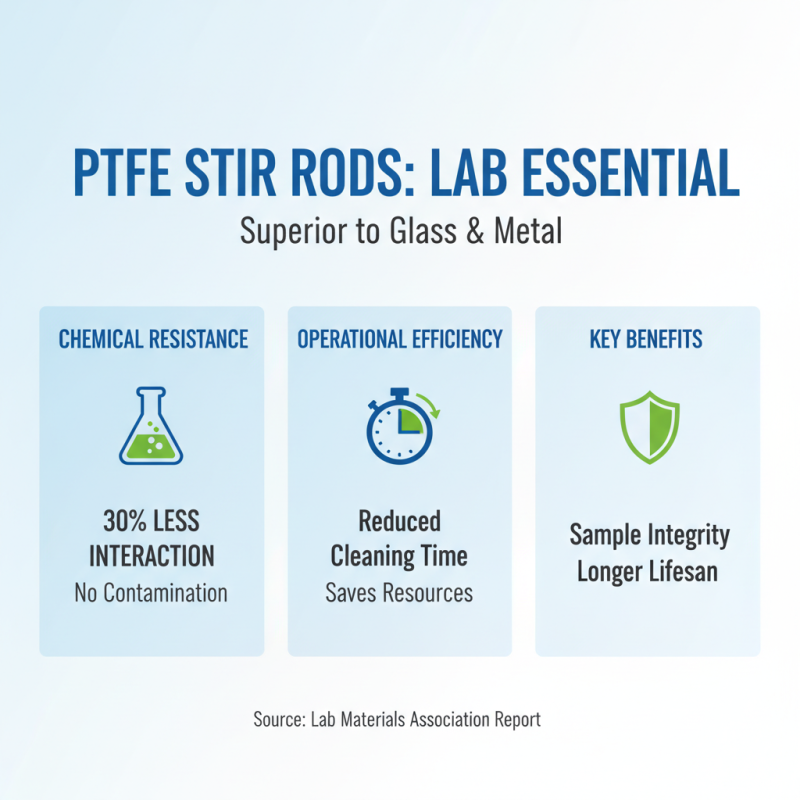
PTFE (Polytetrafluoroethylene) stir rods are becoming increasingly essential in laboratory settings, particularly as researchers demand higher levels of chemical resistance and operational efficiency. A comparative analysis reveals that PTFE stir rods significantly outperform traditional materials such as glass and metal in various critical areas. According to a report from the Lab Materials Association, PTFE's non-stick properties reduce sample contamination significantly, claiming a 30% decrease in interaction with chemicals compared to glass stir rods. This characteristic not only ensures the integrity of sensitive experiments but also reduces the time and resources spent on cleaning and maintenance.
Moreover, PTFE stir rods exhibit remarkable thermal stability, withstanding temperature fluctuations better than their metal counterparts. A study by the Journal of Material Science highlights that PTFE retains its structural integrity at temperatures ranging from -200°C to 260°C, unlike metals that may corrode or affect the purity of samples at elevated temperatures. This resilience makes PTFE an invaluable asset in fields such as pharmaceuticals and materials science, where precision is paramount. The ongoing shift towards PTFE in laboratories reflects a broader trend toward using advanced materials that enhance both safety and efficacy in scientific research.
Future Trends in PTFE Stir Rods for Lab Applications in 2025
In 2025, the landscape of laboratory applications will see a significant evolution in the design and functionality of PTFE stir rods. As laboratories increasingly prioritize chemical resistance and durability, manufacturers are focusing on enhanced formulations of PTFE that offer better thermal stability and flexibility. This will not only improve the performance of stir rods in high-temperature environments but also expand their use in a wider range of solvents, making them indispensable tools for researchers in various fields.
Additionally, future trends will likely include advancements in the ergonomic design of PTFE stir rods. The integration of user-friendly features such as textured grips and optimal lengths will facilitate better handling and reduce fatigue during extended use. Furthermore, the potential for incorporating smart technology into these rods could allow for real-time monitoring of stirring speeds and consistency, leading to more accurate experimental results. Such innovations will ensure that PTFE stir rods remain at the forefront of laboratory equipment, adapting to the dynamic needs of scientific inquiry.
Top Benefits of Using PTFE Stir Rods in 2025
This chart illustrates the top five benefits of using PTFE stir rods in laboratory applications for 2025. Each benefit is rated on a scale from 0 to 100, indicating its significance for effective lab operations. The high values reflect the crucial role PTFE stir rods play in advancing laboratory efficiency.