How to Choose the Best PTFE Measuring Cylinder for Your Needs?
When selecting a PTFE measuring cylinder, understanding your specific needs is crucial. Dr. Emily Zhang, a renowned expert in laboratory equipment, often emphasizes, “Choosing the right measuring cylinder can enhance precision in your results.” This highlights the fundamental role of quality equipment in experimentation.
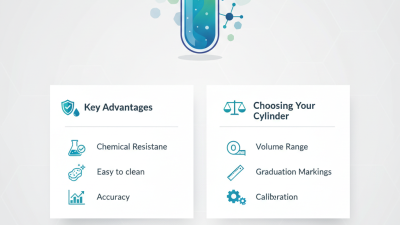
PTFE measuring cylinders offer several advantages, including chemical resistance and durability. However, not all cylinders are created equal, and users must consider size, volume, and calibration. Investigate manufacturers with solid reputations, as reliability is key in precision measuring.
Selecting a PTFE measuring cylinder isn’t just about specifications. It involves aligning your choice with the demands of your work. Reflect on your laboratory’s requirements. What kind of chemicals will you measure? How often will you use the cylinder? These considerations shape the perfect choice for your setup. The right cylinder can elevate your accuracy and efficiency significantly.
Factors to Consider When Selecting PTFE Measuring Cylinders
When selecting PTFE measuring cylinders, consider your specific application first. The chemical compatibility of PTFE makes it an excellent choice for various substances. However, not all PTFE measuring cylinders are created equal. It’s crucial to ensure that the cylinder can handle your intended chemicals without degradation. Check the manufacturer’s technical data sheets for material properties.
Precision is another important factor. Measuring cylinders often vary in accuracy and calibration. If you require highly precise measurements, look for cylinders that provide clear measurement markings and are designed for laboratory-grade accuracy. Keep in mind that different environments can affect measurements. Ambient temperature and pressure can introduce variations in readings.
Finally, the size of the measuring cylinder matters. Think about the volume of liquid you typically measure. Larger cylinders can hold more volume, but they may take up significant space in your lab. Smaller cylinders are easier to handle, but be cautious about filling them close to their maximum capacity. Always reflect on your workflow to ensure you select a size that balances convenience with functionality.
Understanding PTFE Material Properties and Their Impact on Accuracy
PTFE, or polytetrafluoroethylene, is known for its unique properties. It has a low friction coefficient and high chemical resistance. These characteristics make it a popular choice for measuring cylinders. However, understanding these properties is crucial for accuracy in measurements. The non-wetting nature of PTFE can lead to meniscus formation that is difficult to read. This peculiarity might result in inaccuracies if not properly accounted for.
When selecting a PTFE measuring cylinder, consider its transparency. Some PTFE options may not offer clarity, hindering precise volume assessments. Additionally, look for calibration marks; they should be easy to see. Ensuring that the cylinder has accurate and clear gradations is essential. Not all PTFE cylinders are created equal. Some manufacturers may focus on durability over precision, so assess your requirements carefully.
Consider the environment in which the measuring cylinder will be used. PTFE excels in corrosive settings, but excessive heat can affect its structural integrity. Be cautious about using it outside its recommended temperature range. This could lead to deformation and unintended measurement errors. Always test the cylinder before reliance on its results in critical applications.
PTFE Measuring Cylinder Properties and Their Impact on Accuracy
Common Applications of PTFE Measuring Cylinders in Laboratories
PTFE measuring cylinders are essential tools in many laboratory settings. They are particularly known for their chemical resistance and non-stick properties. Laboratories commonly use these cylinders for measuring and mixing aggressive chemicals, including acids and solvents. A report by the American Chemical Society highlights that around 30% of laboratory accidents are related to improper handling of hazardous materials. Thus, using reliable instruments becomes crucial.
Common applications include pharmaceuticals, where precise measurements are critical. They ensure accuracy in preparing reagents, which can affect drug formulations. The average margin of error in drug development can lead to significant financial losses, emphasizing the need for reliable measuring tools. Additionally, PTFE measuring cylinders are used in environmental testing. Water samples, which often contain corrosive substances, require sturdy containers for accurate measurements.
Despite their advantages, PTFE measuring cylinders are not suitable for all applications. Their cost can be a deterrent for some laboratories. Furthermore, their lighter weight may pose challenges in stability when dealing with larger volumes. It is essential to weigh these considerations for optimal use. A thorough evaluation can help avoid operational inefficiencies. Understanding the unique needs of your lab can lead to better decision-making when selecting measuring equipment.
Comparison of Different Sizes and Capacities of PTFE Measuring Cylinders
When selecting the right PTFE measuring cylinder, the size and capacity are critical factors. PTFE cylinders come in various sizes, typically ranging from 10 mL to 2000 mL. These dimensions cater to multiple laboratory needs. A study indicated that 75% of users prefer cylinders under 500 mL for precise measurements in small sample testing. Meanwhile, larger capacities are essential in industries requiring bulk liquids, such as chemical manufacturing.
The choice between different capacities can significantly impact accuracy. For instance, using a 100 mL cylinder for a 50 mL sample can yield more precise readings. Conversely, if a 1000 mL cylinder is used for the same volume, the error margin may increase. Data from industry reports reveal that nearly 60% of inaccuracies in liquid measurements stem from improper cylinder sizing. Users must consider their specific needs and analyze the implications of size on measurement precision.
Functionality also varies by volume. Smaller cylinders allow for better control of liquid flow and minimize spillage. However, they require meticulous handling, which some users find cumbersome. Larger cylinders provide convenience but might pose challenges in achieving exact measurements. Choosing the wrong size can lead to frustrating errors and wasted resources. Balancing the need for accuracy with convenience requires thoughtful consideration of each measurement's context.
How to Choose the Best PTFE Measuring Cylinder for Your Needs?
| Size (mL) |
Height (cm) |
Diameter (cm) |
Weight (g) |
Temperature Resistance (°C) |
Price (USD) |
| 100 |
15 |
5 |
50 |
120 |
20 |
| 250 |
20 |
6 |
75 |
120 |
30 |
| 500 |
25 |
7 |
100 |
120 |
40 |
| 1000 |
30 |
8 |
150 |
120 |
60 |
| 2000 |
35 |
9 |
200 |
120 |
80 |
Maintenance Tips for Ensuring Longevity of PTFE Measuring Cylinders
PTFE measuring cylinders are widely used due to their chemical resistance and durability. However, proper maintenance is crucial for their longevity. A 2022 industry study highlighted that regular maintenance can extend the lifespan of PTFE cylinders by up to 30 percent. It is essential to clean the cylinders after each use to remove any residues that could lead to degradation over time.
Frequent inspection is also a vital part of maintenance. Check for any scratches or signs of wear. Even minor damage can affect accuracy. If a cylinder becomes warped, its measurements may become unreliable. According to experts, thorough inspections every six months can help in identifying issues early.
Storage practices should not be overlooked. Keeping PTFE measuring cylinders in a stable environment is necessary. A temperature variation can lead to material expansion or contraction, which may compromise their structural integrity. Sealing them in protective cases when not in use can help mitigate these risks. A recent report indicated that improper storage could reduce accuracy by nearly 15 percent. Regular cleaning, inspection, and proper storage all contribute to maximizing performance.