Leave Your Message
Choosing a Ptfe Evaporating Dish in 2026 requires more than checking price, diameter, or a supplier’s product photo. Laboratories now expect stable performance, traceable materials, and safer handling during repeated heating and solvent evaporation. The Grand View Research PTFE market report identifies continued growth in high-performance fluoropolymer demand through 2030. That trend reflects wider use in chemical processing, pharmaceuticals, environmental testing, and research laboratories.
Heat matters, but chemical exposure matters more. A suitable dish should resist strong acids, bases, and many organic solvents without absorbing residues easily. PTFE also offers a low-friction, non-stick surface, which can simplify sample recovery after evaporation. However, “chemically resistant” does not mean universally risk-free. Temperature limits, mechanical damage, and incompatible reagents still require professional review. ASTM material guidance and laboratory safety practices should support the final decision.
Small details often decide practical success. Check the working temperature, wall thickness, usable volume, and flatness of the base. A 100 mL dish may suit routine analytical work, while larger samples need stronger support and controlled heating. Confirm whether the manufacturer provides material certificates, dimensional tolerances, and cleaning instructions. Reports from MarketsandMarkets on laboratory equipment also show rising demand for durable, contamination-conscious tools, but market statistics cannot replace validation in your own workflow.
No single dish fits every laboratory. I have seen inexpensive pieces deform after careless heating. That mistake is costly. Selection should balance chemical compatibility, thermal behavior, sample volume, cleaning demands, and supplier reliability. The best choice is not always the most expensive one. It is the one that performs consistently under documented conditions.
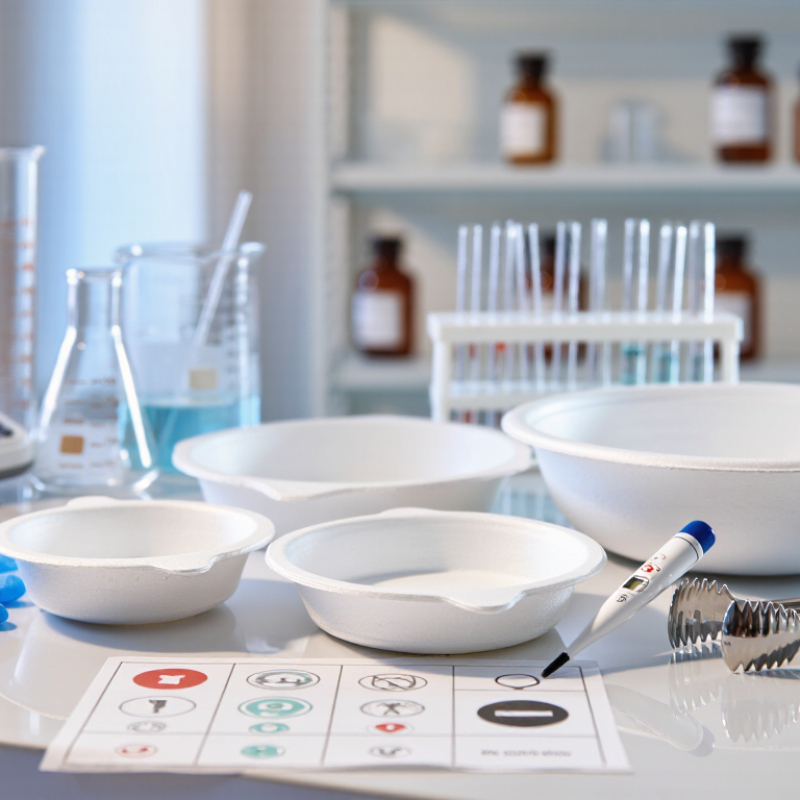
A PTFE evaporating dish is a shallow laboratory vessel made from polytetrafluoroethylene. It holds liquid samples while gentle heating removes solvents or water. The wide surface speeds evaporation. Its smooth, nonstick interior also helps reduce residue loss during transfer.
PTFE resists many acids, bases, and organic chemicals, making it useful for demanding sample preparation. It is lightweight and less likely to break than glass. However, it is not a universal heat container. Many PTFE dishes support continuous use near 260°C, but the exact limit depends on construction and supplier specifications. Never place one directly over an uncontrolled flame.
When choosing a PTFE evaporating dish in 2026, check the working temperature range, diameter, depth, wall thickness, and chemical compatibility data. A small dish suits limited samples. A wider dish can shorten evaporation time, but it may increase splashing. Inspect the surface under bright light. Scratches, discoloration, or deformation can affect cleaning and sample recovery.
Handle it carefully.
Metal tools can mark PTFE. Use compatible spatulas and avoid abrasive powders. Rinse residues promptly, then clean according to the laboratory’s validated procedure. It is tempting to assume that a nonstick surface needs little care. That assumption is sometimes wrong. For trace analysis, request material certificates and test a blank before routine use.
| Selection Dimension | Typical Data or Range | What It Means | Recommended Choice |
|---|---|---|---|
| What it is | A shallow laboratory vessel made from polytetrafluoroethylene (PTFE) | It is used to concentrate solutions, evaporate solvents, digest samples, or dry residues. | Choose PTFE when chemical inertness and low contamination are more important than rapid heat transfer. |
| Temperature capability | Typical continuous-use guidance: approximately −200°C to +260°C; PTFE melting point: approximately 327°C | The recommended working limit is lower than the melting point and depends on load, heating method, and product design. | For routine heating, remain within the supplier’s stated operating range and avoid direct high-temperature flame contact. |
| Common capacity | Approximately 10 mL to 500 mL, with larger sizes available for specialized work | Capacity determines the maximum practical sample volume and affects evaporation area. | Select a dish that holds no more than about one-half to two-thirds of its nominal capacity during active evaporation. |
| Typical diameter | Approximately 40 mm to 180 mm, depending on capacity and design | A wider diameter generally provides more exposed surface area and can support faster evaporation. | Choose a wider dish for dilute solutions and a smaller diameter for limited sample quantities. |
| Chemical resistance | Excellent resistance to most acids, bases, salts, and many organic solvents | PTFE has very low chemical reactivity, making it suitable for aggressive laboratory reagents. | Verify compatibility with highly reactive fluorinating agents, molten alkali metals, and conditions involving extreme heat. |
| Surface properties | Non-stick surface; low surface energy; hydrophobic | Dried residues are less likely to adhere strongly, which can simplify sample recovery and cleaning. | Use a smooth, undamaged surface when minimizing sample loss is important. |
| Contamination control | No glass or metal contact with the sample; low extractable risk when properly manufactured and cleaned | PTFE can reduce metal-ion or glass-related contamination in sensitive analytical procedures. | Choose laboratory-grade PTFE with documented material quality for trace analysis. |
| Heating method | Suitable for controlled hot plates, heating blocks, ovens, and water or oil baths within rated limits | PTFE is a poor thermal conductor and may heat less uniformly than metal or glass. | Use gradual, evenly distributed heating and avoid empty-dish overheating. |
| Shape and wall design | Shallow bowl; rounded or pouring rim; rigid or reinforced base on some models | The geometry affects evaporation rate, transfer accuracy, stability, and cleaning. | Select a stable base for heating and a pouring rim when transferring concentrated solutions. |
| Mechanical behavior | Lightweight, non-brittle, but softer and less rigid than glass or ceramic | PTFE is resistant to breakage but can deform, scratch, or creep under prolonged load and heat. | Use wide support and avoid sharp tools, excessive clamping, and heavy loads at elevated temperature. |
| Cleaning and reuse | Generally easy to rinse; compatible with many common laboratory cleaning procedures | The non-stick surface reduces residue retention, but scratches can trap contaminants. | Clean with suitable solvents or mild detergent, inspect regularly, and replace visibly damaged dishes. |
| Best applications | Acid digestion, solvent concentration, residue drying, trace-element preparation, and general chemical evaporation | These applications benefit from PTFE’s chemical resistance and low adhesion. | Match capacity, surface area, temperature rating, and cleanliness level to the exact procedure. |
| Important limitations | Poor heat transfer; possible deformation; unsuitable for certain highly reactive fluorinating systems | PTFE is not automatically the best option for rapid evaporation, high rigidity, or direct flame heating. | Choose glass, ceramic, or metal when their thermal or mechanical properties better fit the procedure. |
Note: Dimensions and operating ranges are typical laboratory selection guidelines. Always confirm the manufacturer’s technical specification, chemical-compatibility data, and safe-use instructions before application.