What is a Ptfe Magnetic Stirrer Bar and Its Applications?
In the realm of laboratory equipment, the importance of a PTFE magnetic stirrer bar cannot be understated. This unique device has revolutionized mixing processes in various applications. Dr. Emily Chen, a leading expert in laboratory technologies, once remarked, "The PTFE magnetic stirrer bar is pivotal in achieving precise and efficient mixing." Her insights highlight the stirrer bar’s significant role in enhancing experimental outcomes.
PTFE magnetic stirrer bars are made of polytetrafluoroethylene, known for its chemical resistance and durability. These properties make them ideal for use in diverse settings, from chemistry labs to food industry applications. The stirrer bars ensure smooth mixing without contamination, preserving the integrity of sensitive materials. Using a PTFE magnetic stirrer bar facilitates consistency in experimental results, leading to more reliable data.
However, not all magnetic stirrer bars provide the same quality. Some users may find that lower-grade options do not withstand harsh chemicals as effectively. Careful selection is vital for optimal performance. Researchers continue to explore innovations in this field, questioning if current designs meet evolving laboratory needs. The PTFE magnetic stirrer bar represents an essential tool with potential for further advancement.
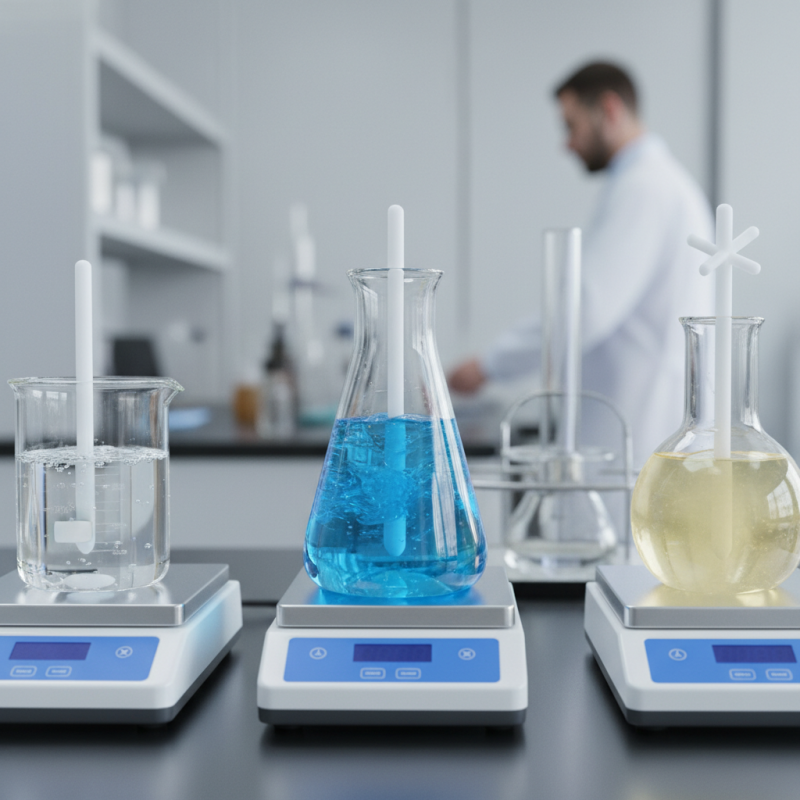
What is a PTFE Magnetic Stirrer Bar?
A PTFE magnetic stirrer bar is a precision tool widely used in laboratories. It is composed of a magnet encased in polytetrafluoroethylene (PTFE). This material ensures chemical resistance, providing durability and reliability in various environments. With a low coefficient of friction, PTFE allows for seamless stirring, even in viscous solutions.
In many applications, such as chemical analysis and biological research, effective mixing is crucial. PTFE magnetic stirrer bars can withstand extreme temperatures and aggressive solvents, making them ideal for diverse tasks. According to industry reports, the global laboratory stirrers market is projected to grow at a CAGR of 5.2% from 2021 to 2028. This growth reflects the increasing reliance on high-quality lab equipment.
Despite their advantages, PTFE stirrer bars can sometimes be prone to floating. This can lead to uneven mixing if not monitored closely. It's essential to choose the appropriate size and weight for optimal performance. Additionally, while PTFE's chemical resistance is noteworthy, long-term exposure to certain substances can still affect its longevity. A thorough understanding of both the material properties and application requirements is vital for maximizing efficiency.
Applications of PTFE Magnetic Stirrer Bar
Composition and Properties of PTFE Magnetic Stirrer Bars
PTFE magnetic stirrer bars are essential tools in laboratories. Made from polytetrafluoroethylene (PTFE), these stirrer bars are highly resistant to chemicals and provide excellent performance. Their composition includes a solid inner core, often made of stainless steel, encased in a smooth PTFE layer. This combination ensures durability and resistance to wear, making them ideal for various applications.
The unique properties of PTFE contribute to its effectiveness. The material is non-stick, which prevents any reaction with the substances being mixed. Furthermore, PTFE ensures that the stirrer bars withstand high temperatures and corrosive environments. They are lightweight, which enhances their ability to stir liquids efficiently. However, despite these strengths, users have reported issues with bar alignment, which can impact stirring efficiency. Careful placement in the container is necessary.
In practical settings, PTFE magnetic stirrer bars serve numerous functions. They are commonly used in chemical synthesis and pharmaceutical research. Their reliable performance is pivotal in experimentation, where precise mixing is crucial. Nevertheless, improper usage can lead to suboptimal results. Investigating and refining mixing conditions remains important to optimize their utility. Each laboratory will have different requirements, so ongoing evaluation is key.
How PTFE Magnetic Stirrer Bars Work in Laboratory Settings
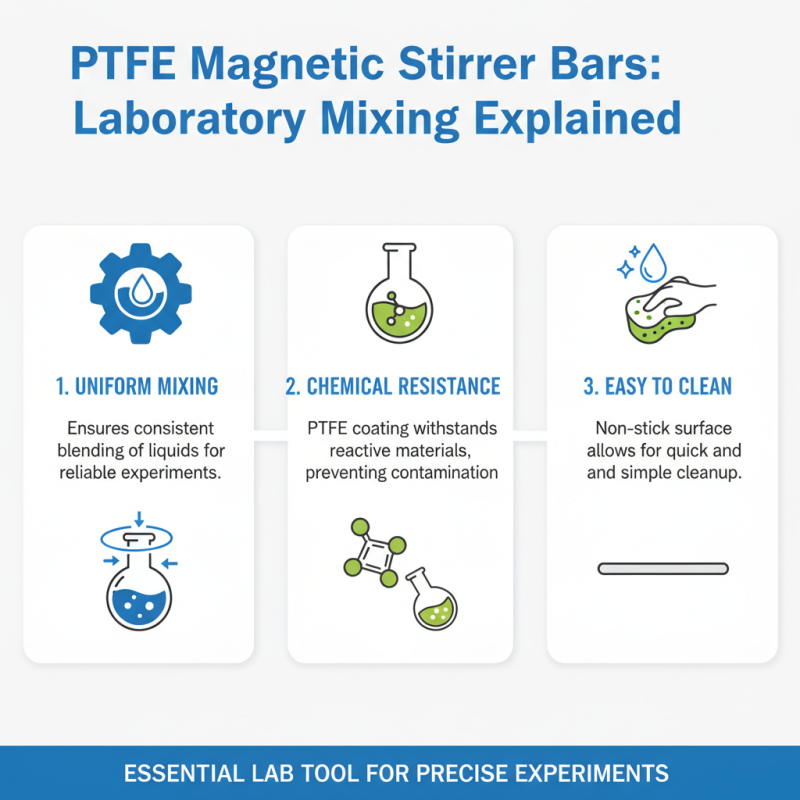
PTFE magnetic stirrer bars are essential tools in laboratory settings. They serve a vital role in ensuring uniform mixing of liquid substances. These bars are coated in polytetrafluoroethylene (PTFE), which is chemically resistant and easy to clean. This makes them perfect for use in various experiments involving reactive materials.
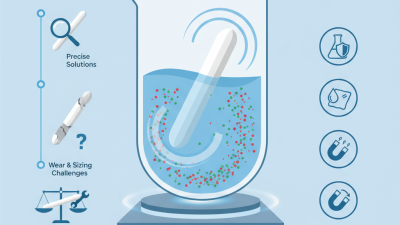
In practice, a PTFE magnetic stirrer bar is placed in a container of liquid. A magnetic field is generated by a stirrer beneath the work surface. This causes the bar to rotate, creating a vortex. The vortex helps to mix the components thoroughly. Researchers appreciate how these stirrer bars do not react with chemicals, maintaining the integrity of the sample. However, their effectiveness can depend on the size and shape of the stirrer bar, which must match the container.
It’s worth noting that not all stirrer bars work equally well in every scenario. Sometimes, they may get stuck or not stir effectively. It can be a challenge in larger volumes or highly viscous fluids. Laboratory professionals must experiment with different configurations. Finding the right balance is essential for successful mixing in experiments. It’s an area that invites further exploration and improvement in techniques used.
Applications of PTFE Magnetic Stirrer Bars in Scientific Research
PTFE magnetic stirrer bars are invaluable tools in scientific research. They are widely used for mixing liquids in various laboratory settings.
Their non-stick surface and chemical resistance make them ideal for a range of experiments.
This is especially true in fields such as chemistry, biology, and materials science.
According to recent studies, the global market for stirrer bars is expected to grow by 6.5% annually.
One significant advantage of PTFE stirrer bars is their ability to tolerate high temperatures. They can operate in environments exceeding
200°C. This feature enables researchers to conduct high-temperature experiments without worrying about contamination.
Researchers often report improved reproducibility in their results when using these stirrers. Moreover, the durability of PTFE bars reduces
the need for frequent replacements, leading to consistent and long-term usage.
Despite their many benefits, there are challenges. Some researchers note that PTFE stirrer bars can sometimes result in uneven mixing. This issue needs addressing to enhance performance in critical applications.
Furthermore, slightly irregular shapes may affect how well they interact with different types of beakers.
Understanding these limitations is essential for optimizing their use in scientific research.
The careful selection of stirrer bar sizes and shapes can lead to improved experimental outcomes.
Advantages of Using PTFE Magnetic Stirrer Bars in Various Fields
PTFE magnetic stirrer bars have gained prominence in various fields due to their unique properties. Made from polytetrafluoroethylene, these stirrer bars exhibit exceptional chemical resistance, making them ideal for harsh environments. Their non-stick surface ensures that reactions remain uncontaminated. This feature is particularly beneficial in laboratories where purity is crucial.
In pharmaceutical and chemical industries, PTFE stirrer bars facilitate precise mixing without interfering with the solution. They resist heat and chemical wear, ensuring longevity and reliability. This durability leads to fewer replacements, ultimately saving costs. However, the initial investment might deter some users. Additionally, their unique properties allow them to maintain stable performance in high-viscosity applications.
Despite their many advantages, users should note that PTFE stirrer bars can be slippery in some mixtures. This could lead to suboptimal stirring results. Experimentation may be necessary to achieve the desired mixing efficiency. Therefore, while these stirrer bars offer significant benefits, users must remain attentive to their specific applications. Proper evaluation and adjustments can further enhance their effectiveness.