Top Tips for Choosing the Best Ptfe Magnetic Stir Bar?
Choosing the right PTFE magnetic stir bar can significantly impact laboratory efficiency. According to a report by Research and Markets, the global magnetic stirrer market is projected to grow at a CAGR of 4.5% through 2025. This highlights the importance of quality stir bars in various applications, including chemical research and pharmaceuticals.
When considering a PTFE magnetic stir bar, factors like size, shape, and resistance to chemicals play a crucial role. Different formulations can affect performance, and not all stir bars are created equal. A study by the American Chemical Society emphasizes that inadequate stirring can lead to inconsistent results, affecting research outcomes.
Many users overlook the importance of proper selection. They might choose a less effective stir bar simply due to cost or availability. However, investing in a high-quality PTFE magnetic stir bar can enhance experimental accuracy. It is essential to analyze available options carefully to avoid potential pitfalls in laboratory work.

Understanding PTFE Magnetic Stir Bar Materials and Properties
When selecting PTFE magnetic stir bars, understanding the materials involved is crucial. PTFE, or polytetrafluoroethylene, stands out due to its unique properties. It has excellent chemical resistance, making it suitable for stirring corrosive substances. According to a study by the American Chemical Society, the durability of PTFE allows it to function effectively in harsh environments that other materials cannot withstand.
One significant aspect of PTFE stir bars is their non-stick nature. This prevents sample contamination and ensures that applications, like biochemical assays, yield accurate results. Studies show that PTFE-based materials can withstand temperatures up to 260°C. However, performance can be variable if not matched with the right stirrer speed. It’s something users often overlook, leading to inefficient mixing or uneven reactions.
Furthermore, while PTFE is considered a reliable choice, it is not without limitations. Its mechanical properties can degrade over time, particularly under constant use in high-stress conditions. Users should regularly inspect and replace stir bars to maintain optimal function. Understanding these aspects of PTFE stir bars can enhance laboratory workflows and ultimately lead to better experimental outcomes.
Comparison of PTFE Magnetic Stir Bar Properties
Evaluating the Size and Shape of Magnetic Stir Bars for Optimal Mixing
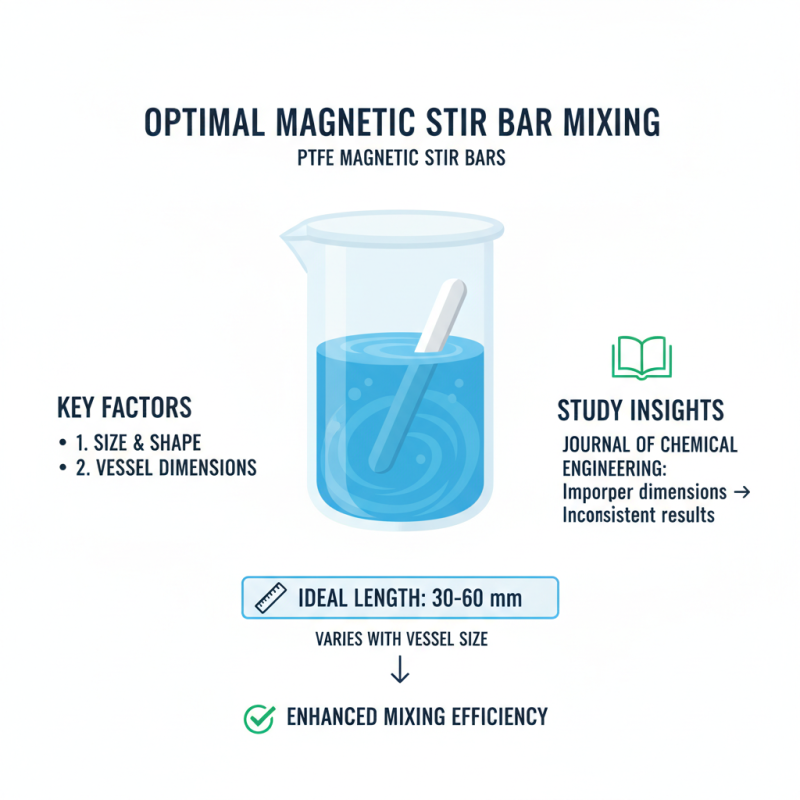
Choosing the right PTFE magnetic stir bar is essential for effective mixing. Analyzing the size and shape of stir bars can significantly enhance the mixing process. A study from the Journal of Chemical Engineering highlights that improper stir bar dimensions can lead to inconsistent results. Ideal lengths typically range from 30 to 60 mm. However, this can vary based on the vessel size.
Shape plays a crucial role too. Round-shaped stir bars are versatile and generally provide better mixing in standard laboratory setups. Meanwhile, octagonal or square bars create more turbulence, making them suitable for higher viscosity liquids. Research indicates that using the correct shape can improve mixing efficiency by up to 25%.
However, it’s important to consider the integration of the stir bar with the container type. Using a bar that is too short may not achieve adequate mixing in tall or narrow vessels. Similarly, an overly long bar can hinder performance in smaller containers. Regular evaluation of stir bar performance can help identify these inefficiencies. Monitoring your mixing process may uncover issues that need attention.
Assessing Magnetic Strength for Effective Stirring in Laboratory Applications
When selecting PTFE magnetic stir bars, the magnetic strength is a pivotal factor for effective stirring in laboratory environments. According to a recent study published in the Journal of Laboratory Automation, optimal stirring requires a magnetic field strength exceeding 50 mT. This strength ensures that the stir bar remains stable and effective in various viscous liquids, enhancing mixing performance. However, it is essential to balance strength with size; larger stir bars might provide strong magnetic pull but can lead to uneven stirring in smaller containers.
Magnetic stir bars should fit snugly within the vessel for efficient performance. A mismatch can result in poor mixing. Some researchers found that stir bars with a diameter exceeding 10 mm often struggle in smaller flasks. While certain stir bars promise high strength, the material and design also matter. Reports indicate that a poorly designed PTFE coating can wear out over time, affecting both durability and magnetic efficiency. Laboratory technicians should regularly assess their stir bars for wear to maintain consistency in results.
Careful selection and ongoing assessment can significantly impact laboratory outcomes. Not every application requires the same magnetic strength or stir bar design. Adopting a one-size-fits-all mentality risks suboptimal performance. Each experiment may require unique considerations based on viscosity and container size. Therefore, understanding the specific needs of your application is crucial for achieving reliable and reproducible results.
Comparing PTFE Stir Bars with Other Materials: Pros and Cons
When selecting a stir bar for your experiments, the material matters greatly. PTFE (polytetrafluoroethylene) stir bars are popular due to their chemical resistance and non-stick properties. They handle solvents well, making them ideal for various tasks. However, they might not perform well in all conditions. For example, in high-temperature applications, PTFE can degrade. This limitation should influence your choice.
In contrast to PTFE, glass and aluminum stir bars offer distinct advantages. Glass stir bars are transparent, allowing direct observation of reactions. They are sturdy, but they can break easily. Aluminum bars are durable and effective in many applications, yet they may react with certain chemicals. Each material presents trade-offs, with PTFE still standing out for its versatility in a range of conditions.
Choosing the right stir bar involves evaluating your specific needs and the tasks at hand. Think about the chemicals you will use. Consider the temperatures you expect. Reflecting on these factors can help you make an informed decision. Balancing advantages and drawbacks can refine your experience in the lab.
Best Practices for Maintaining and Storing PTFE Magnetic Stir Bars
When it comes to maintaining PTFE magnetic stir bars, proper care is essential. These stir bars are popular due to their chemical resistance and durability. However, many users overlook simple maintenance steps. Regular cleaning is crucial. Using a mild detergent and warm water can effectively remove any residue. Rinse thoroughly to avoid contamination in future experiments.
Storage plays a significant role in prolonging the lifespan of your stir bars. Store them in a dry, dust-free environment. Avoid stacking them with heavy items; this can lead to chipping or scratching. Using a designated storage container can help keep them organized and safe. Some users may neglect this step, resulting in damage over time.
Lastly, inspect your stir bars periodically. Look for signs of wear or damage. A small crack can lead to performance issues. Even a minor imperfection can affect magnetic properties. Maintaining a routine inspection could save time and resources in the lab. Everyone can benefit from a little reflection on their habits. Taking these steps will ensure reliable results in your experiments.
Top Tips for Choosing the Best PTFE Magnetic Stir Bar - Best Practices for Maintaining and Storing PTFE Magnetic Stir Bars
| Attribute |
Recommendation |
| Material Quality |
Choose high-purity PTFE for better chemical resistance. |
| Size |
Select a stir bar size that fits the volume of your container. |
| Shape |
Consider oval or cylindrical shapes based on mixing requirements. |
| Magnet Strength |
Opt for a stir bar with strong magnets for effective stirring. |
| Temperature Resistance |
Ensure the stir bar can withstand the operating temperature of your processes. |
| Maintenance |
Clean with non-abrasive materials to extend life. |
| Storage |
Store in a dry, cool environment away from direct sunlight. |
| Chemical Compatibility |
Verify compatibility with chemicals used in your application. |