| Coating material |
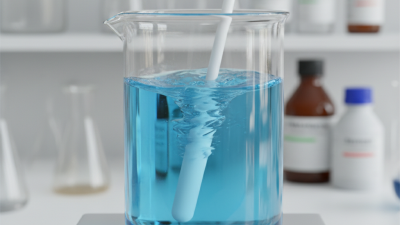
Polytetrafluoroethylene (PTFE), a chemically resistant fluoropolymer with a low-friction surface. |
Reduces liquid adhesion and helps prevent many chemicals from contacting the magnetic core. |
Choose PTFE when chemical resistance, cleanability, and low sample contamination are important. |
| Common operating temperature |
PTFE is commonly used across approximately −200 °C to +260 °C; actual limits depend on the bar design, exposure time, and equipment. |
Supports mixing in many refrigerated, room-temperature, and heated laboratory procedures. |
Verify the vessel, coating condition, and manufacturer temperature limits before high-temperature use. |
| Chemical compatibility |
Generally resistant to many aqueous solutions, dilute acids, bases, and organic solvents. |
Suitable for a broad range of routine chemical and biological mixing applications. |
Check compatibility for molten alkali metals, elemental fluorine, and highly reactive chemicals at elevated temperatures. |
| Standard cylindrical bar |
Typical sizes: 20–40 mm long and 6–8 mm in diameter; smooth cylindrical body. |
Provides steady general-purpose stirring in beakers, flasks, and bottles. |
Best starting option for low- to medium-viscosity liquids and routine solution preparation. |
| Octagonal or polygonal bar |
Commonly available in approximately 20–50 mm lengths with multiple flat mixing surfaces. |
Flat faces can improve liquid movement and reduce slipping in some vessels. |
Use for general mixing when stronger turbulence is preferred over the smoothest operation. |
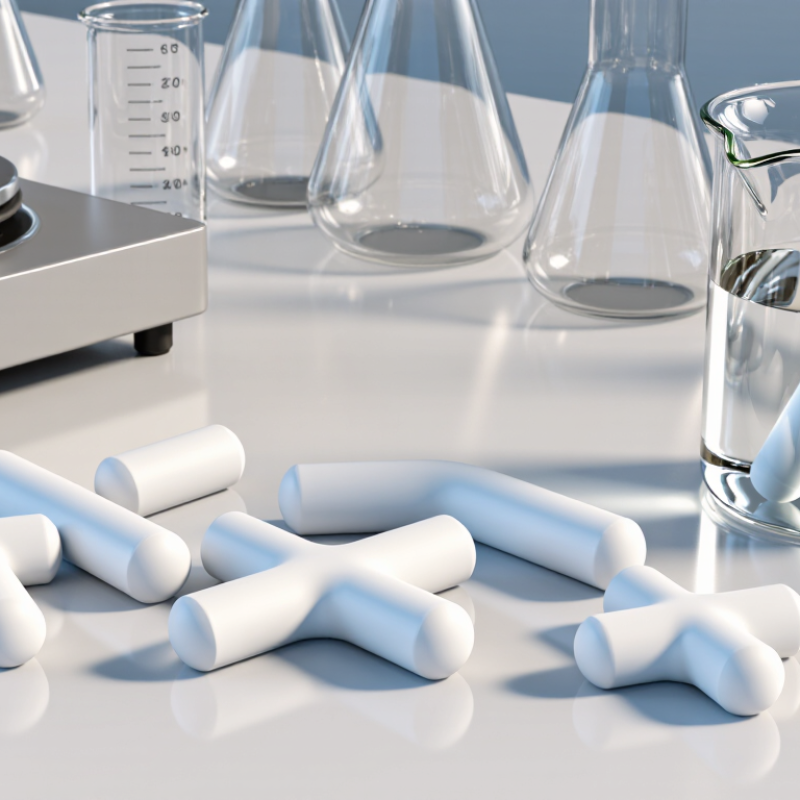
| Cross-shaped bar |
Typical overall length: 25–50 mm; cross arms increase the effective mixing area. |
Can generate stronger circulation in larger vessels or moderately viscous samples. |
Select for higher-volume mixing, provided the vessel has sufficient clearance. |
| Pivot-ring bar |
A central ring helps the bar rotate around a stable pivot point; typical lengths are about 25–50 mm. |
May improve rotational stability and reduce wandering at moderate stirring speeds. |
Useful for flat-bottom vessels and applications requiring consistent bar positioning. |
| Egg-shaped or oval bar |
Compact oval profiles are commonly about 10–30 mm long and 6–12 mm wide. |
Fits curved-bottom vessels and small containers while helping maintain smooth rotation. |
Choose for test tubes, vials, round-bottom vessels, and small sample volumes. |
| Bar length relative to vessel |
A practical starting point is a bar approximately one-quarter to one-third of the vessel’s internal diameter, subject to vessel geometry. |
An incorrectly sized bar may produce weak circulation, excessive vibration, or unstable coupling. |
Select the smallest bar that provides adequate circulation without contacting the vessel walls. |
| Sample viscosity |
PTFE-coated bars work best in low- to moderate-viscosity liquids; very viscous samples require appropriate bar geometry and motor torque. |
Higher viscosity increases resistance and may cause decoupling or reduced mixing speed. |
Use a larger, cross-shaped, or polygonal bar with a suitable magnetic drive for more viscous liquids. |
| Surface cleanliness |
PTFE is non-stick and can typically be rinsed, washed, or cleaned with compatible laboratory solvents. |
Helps reduce cross-contamination between batches and simplifies routine cleaning. |
Use a dedicated bar or validated cleaning procedure for trace analysis, sterile work, or sensitive assays. |
| Inspection and replacement |
Inspect regularly for cracks, pinholes, swelling, discoloration, exposed core material, or damaged edges. |
A damaged coating can reduce chemical protection and increase contamination risk. |
Replace the bar immediately if the PTFE coating is visibly damaged or the bar no longer rotates smoothly. |