Which Is the Best PTFE Centrifuge Tube in 2026?
Choosing the best Ptfe Centrifuge Tube in 2026 is not just a material comparison. The right tube must suit the sample, the centrifuge, and the working conditions. PTFE is valued for broad chemical resistance and a useful temperature range, but those features do not make every tube suitable for every procedure. Details matter.
This guide compares practical factors buyers and laboratory teams should check: stated chemical compatibility, operating temperature, tube capacity, closure design, and manufacturer-rated centrifugal force. Match the tube’s rating to the rotor and instrument instructions. Do not assume that a PTFE tube can handle a particular speed just because the material feels robust. A secure cap, clear product specifications, and consistent manufacturing can matter as much as the polymer itself. Small details count.
There is no universal winner. A tube that performs well with a demanding solvent may be unnecessary for routine sample preparation, while a low-cost option may lack the documentation a laboratory needs. That trade-off deserves a second look. Product listings can also leave important questions unanswered, such as how the stated limits were tested or whether the cap uses compatible materials. Where specifications are unclear, contact the supplier before use and test suitability under an approved laboratory procedure. This comparison focuses on evidence-backed selection criteria, not broad promises. Its aim is simple: help readers identify a Ptfe Centrifuge Tube that fits their real workflow, with safety, reliability, and long-term value in view.
What Is a PTFE Centrifuge Tube?
What Is a PTFE Centrifuge Tube?
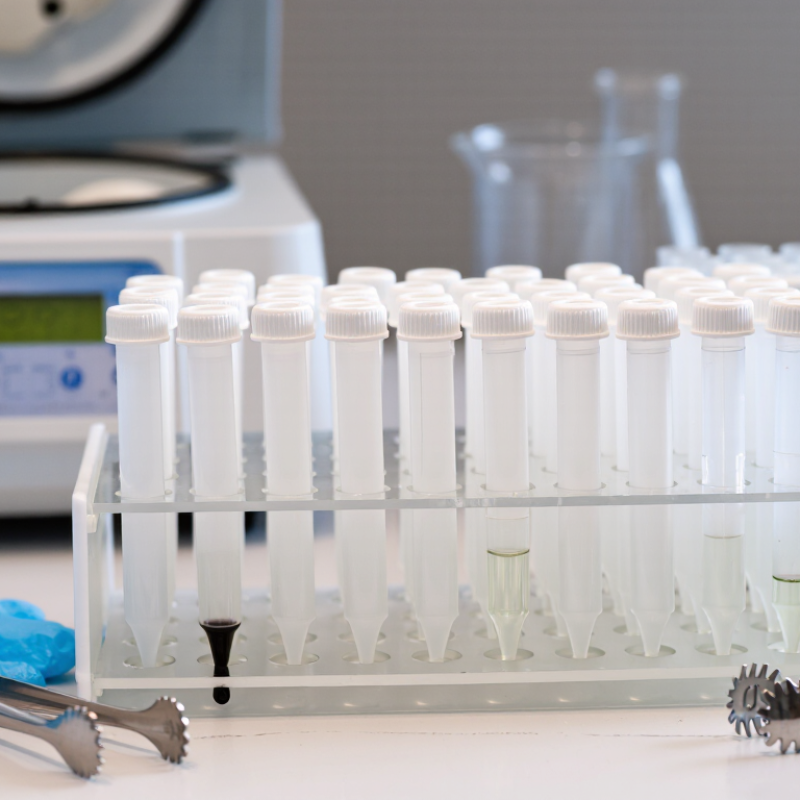
A PTFE centrifuge tube is a sample vessel made from polytetrafluoroethylene, a fluoropolymer valued for chemical resistance and a low-friction surface. The Polymer Data Handbook, 2nd edition, reports PTFE density around 2.14–2.20 g/cm³ and a melting point near 327°C. Those figures describe the material, not the safe operating limits of a finished tube.
Important distinction.
In practice, PTFE can help when samples contact aggressive reagents or must be recovered with minimal sticking. Picture a viscous sample leaving fewer stubborn films on the tube wall. But PTFE is relatively soft and may deform under pressure; its high heat tolerance does not guarantee safe high-speed spinning. ASTM D4894 specifies properties of granular PTFE molding and extrusion materials, not centrifuge-tube performance.
Check the tube’s stated relative centrifugal force (RCF), temperature range, closure, and rotor compatibility before use. Do not infer an RCF rating from the resin alone.
This is easy to overlook.
For reliable work, match the vessel to the sample, rotor, and run conditions, then inspect it for scratches or distortion. A small mismatch can matter. Published material data offer useful context, but the finished tube’s tested limits should guide the procedure.
How PTFE Properties Affect Centrifuge Tube Performance
Which Is the Best PTFE Centrifuge Tube in 2026?
How PTFE Properties Affect Centrifuge Tube Performance
The best PTFE centrifuge tube depends on the sample, rotor, and operating conditions. PTFE resists many corrosive chemicals and has a low-friction surface, which can help when handling sticky residues. It also tolerates a broad temperature range, but that alone does not make every tube suitable for every centrifuge. Tube dimensions, closure design, and the manufacturer’s speed rating matter. A tube that fits loosely can be a poor choice, even if its material suits the sample.
Tips: Check the chemical compatibility guidance for the exact solution and temperature. Confirm the tube’s rated centrifugal force, not just its material. Inspect for scratches, distortion, or damaged threads before use. Small details matter.
PTFE can be less rigid than some commonly used tube materials, so deformation under load deserves attention. Its low-friction surface may also make some caps or fittings feel less secure; verify the closure system rather than assuming it will seal well. For a new setup, test with a noncritical sample and check for leakage or shape changes. I would not rely on a general temperature limit as a substitute for the tube’s specific operating instructions. Compatibility charts are useful, but real mixtures can behave differently. That part is easy to overlook.
Which Factors Matter When Comparing PTFE Centrifuge Tubes?
Choosing the best PTFE centrifuge tube in 2026 starts with the sample, not the label. Check chemical compatibility against every solvent, acid, or reagent in your procedure. PTFE handles many demanding chemicals, but caps, liners, and seals may have different limits. That mismatch can cause leaks. Confirm the full assembly’s temperature range, especially if samples undergo repeated heating or cooling.
Fit matters. Compare tube dimensions with the rotor, including its adapters and closure clearance. Then check the centrifuge’s permitted relative centrifugal force for that exact tube configuration. Do not rely on revolutions per minute alone; rotor radius changes the force applied. A tube that fits physically may still be unsuitable for a particular speed. Check the rotor.
Wall thickness, capacity, and closure design also affect handling and sample recovery. Narrow openings can make transfers slower, while larger tubes may leave more sample exposed during pouring. Review supplier specifications and test an unfamiliar setup with a small, noncritical sample. That step can feel overly cautious, but published compatibility charts rarely cover every mixture or repeated-use condition. Inspect tubes for scratches, deformation, or loose closures, and replace questionable pieces rather than guessing.
How Tube Design and Application Shape Product Suitability
Which Is the Best PTFE Centrifuge Tube in 2026?
How Tube Design and Application Shape Product Suitability
A suitable PTFE centrifuge tube starts with the task, not the material label. A conical bottom helps collect a small pellet, while a wider opening makes transfers easier. Check the tube’s stated capacity, closure design, and rotor fit together. Fit matters. A tube that sits poorly can be unsuitable even when its chemical resistance looks excellent.
PTFE has broad chemical resistance, but finished-tube performance depends on wall thickness, seals, and temperature. Typical unfilled-PTFE property listings, including MatWeb data, place its melting point near 327°C; continuous-use limits are commonly listed around 260°C. These are material figures, not safe operating ratings for every tube. ASTM D543-21 describes how plastics can be evaluated against chemical reagents, but a compatibility result does not establish centrifuge strength. Check the product’s rated relative centrifugal force and temperature limits for your exact setup.
One trade-off deserves attention: PTFE can deform under sustained load, so its chemical resilience does not guarantee a rigid tube. For a corrosive sample, compare the full exposure conditions, including concentration, temperature, and contact time. Then confirm the closure seals reliably. Small details matter. A cap that is awkward with gloved hands may invite spills or inconsistent handling. The best choice is the design validated for your rotor and workflow, not simply the tube with the broadest compatibility claim.
Which Is the Best PTFE Centrifuge Tube in 2026? - How Tube Design and Application Shape Product Suitability
| Tube design |
Typical geometry and capacity |
Best suited applications |
Key advantages |
Limitations and checks |
| Conical-bottom PTFE tube |
Narrow, tapered base; capacity depends on the specific model and supplier. |
Pelleting or collecting small amounts of precipitate and other compact solids. |
Concentrates sediment near the tip, which can make recovery easier. |
The narrow base may be less stable under load. Use only with a compatible rotor or adapter and a documented centrifuge rating. |
| Round-bottom PTFE tube |
Rounded base; offered in model-specific volumes. |
General-purpose separation where a rounded vessel fits the centrifuge holder. |
A smooth base can be easier to rinse than a narrow, tapered tip. |
The rounded base does not ensure rotor compatibility. Check the required tube shape, support, and rated operating conditions. |
| Straight-wall PTFE tube |
Cylindrical body with a flat or gently curved base; dimensions vary by design. |
Samples that benefit from a simple internal shape or require convenient access for rinsing and transfer. |
Provides a broad internal wall and can be straightforward to clean. |
A flat-bottom tube may need a specifically designed carrier. Confirm that the tube is intended for centrifugation, not just sample storage. |
| Screw-cap PTFE tube |
Available with different body shapes and closure designs; thread and cap material depend on the assembly. |
Samples that need a closed container during handling or transfer, when the tube assembly is rated for that use. |
A compatible cap can help reduce spills and sample exposure during handling. |
A screw cap is not automatically pressure-tight or centrifuge-rated. Check the cap, liner, seal, fill limit, and operating instructions as a complete assembly. |
| Thick-wall or reinforced PTFE tube |
Wall thickness and reinforcement are design-specific; no universal capacity or speed rating applies. |
Applications where a supplier has validated the complete tube and holder for the intended centrifuge conditions. |
A purpose-designed construction may provide added structural support for its specified use. |
Wall thickness alone does not establish a safe speed. Obtain the manufacturer’s maximum relative centrifugal force (RCF), temperature, and rotor guidance. |
Selection note: PTFE is valued for broad chemical resistance and a wide usable temperature range, but compatibility depends on the chemical, concentration, temperature, and exposure time. Centrifuge limits are specific to the tube design and its complete assembly; do not infer a safe RPM or RCF from the material alone. Verify the tube’s rated conditions, rotor or adapter fit, fill limits, and closure instructions before use.