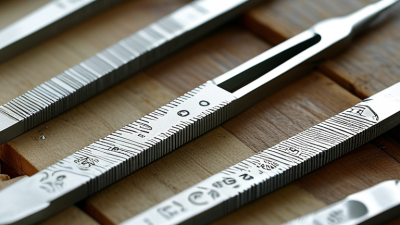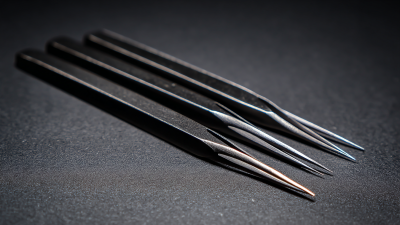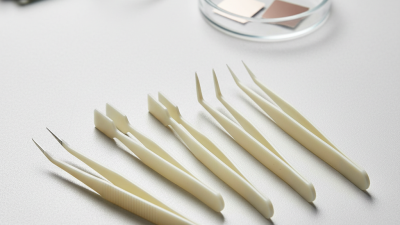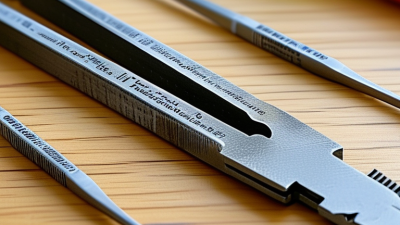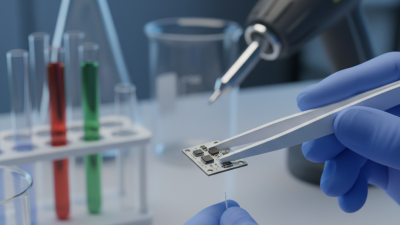
Selecting the right Ptfe Tweezers requires more than comparing product photos or advertised temperature ratings. In electronics benches and laboratories, small details matter. A sharp tip can lift a fragile component without scratching its surface. A rough tip can leave marks, shed particles, or damage delicate coatings.
Recent analyses from Grand View Research and Fortune Business Insights identify electronics and chemical processing as important PTFE application areas. Their findings reflect broader demand for materials that resist heat, chemicals, and sticking. However, PTFE itself is electrically insulating. It should not automatically be considered ESD-safe. The ESD Association’s ANSI/ESD S20.20 framework reminds users to evaluate the complete handling system, not one tool alone.
Roy J. Plunkett, the chemist credited with discovering PTFE, reportedly said, “I had no idea what it was, but I knew it was something new.” That curiosity still matters when choosing tweezers. No tweezer wins every task. Tip alignment, jaw pressure, flexibility, cleanliness, and operator control can change the result. I have found that a comfortable grip often prevents more mistakes than an impressive specification sheet.
This guide compares ten Ptfe Tweezers for electronics and laboratory use. It considers practical handling, material behavior, tip design, and maintenance. Some rankings remain subjective. That is worth admitting. A watchmaker may prefer a finer tip, while a laboratory technician may value chemical resistance and easy cleaning. The best choice depends on the workbench, the material, and the user’s hands.
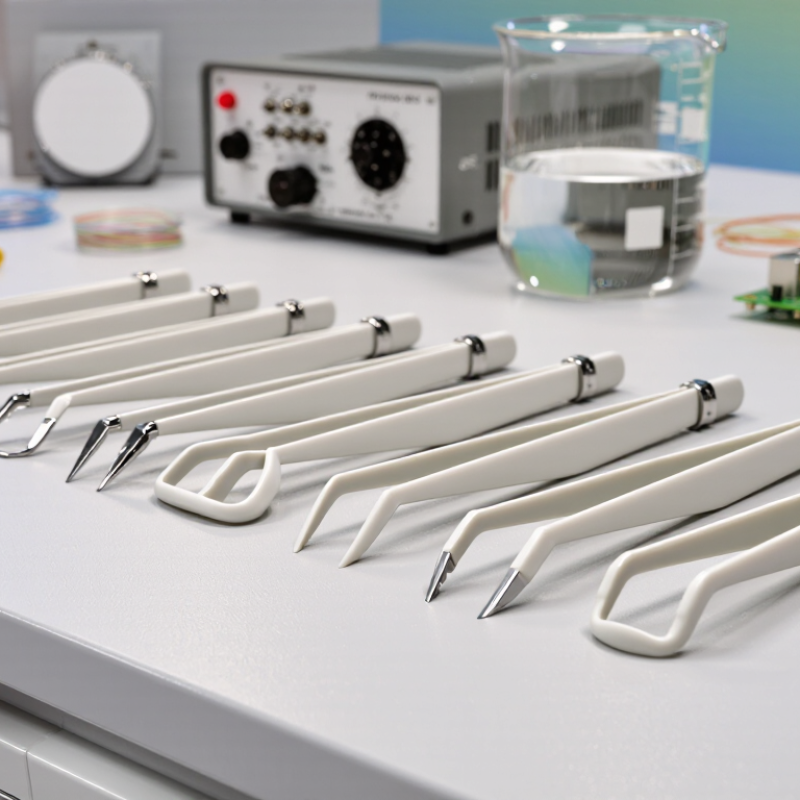
PTFE tweezers are precision tools made with polytetrafluoroethylene, a low-friction fluoropolymer. Their surface resists many chemicals and leaves fewer marks on delicate parts. Unlike bare metal, PTFE is nonconductive, which helps reduce accidental electrical contact during electronics repair. This feature suits circuit boards, sensors, flexible connectors, and small insulated components. The grip feels slightly softer than steel. That softness can protect fragile surfaces from scratches. PTFE also performs well in many laboratory settings, especially when handling samples that may react with metal tools.
In practical bench work, I have found that tip shape matters as much as material. Fine, pointed tips help position tiny components, while broader tips offer better control over films and membranes. They are not indestructible. High heat, sharp edges, and aggressive chemicals can deform or damage PTFE. This deserves attention. PTFE is softer than metal, so a dropped tweezer may develop a bent tip. I inspect the alignment under bright light before delicate work. Cleaning also matters; trapped dust can scratch a sensitive surface. For static-sensitive electronics, nonconductivity alone is not enough. The complete workstation still needs proper grounding and handling procedures. Choosing among the 10 best PTFE tweezers should involve tip accuracy, stiffness, cleanliness, and the actual chemical environment. I sometimes prioritize comfort too late. That is a mistake. A tool that causes hand fatigue can reduce precision, even when its material is technically suitable.
10 Best PTFE Tweezers for Electronics and Lab Use?
Key Features to Compare When Choosing PTFE Tweezers
When comparing PTFE tweezers, check thermal stability, insulation, tip geometry, and surface finish. NIST data places PTFE’s melting point near 327°C, but continuous service limits are much lower. This difference matters near hot soldering tools. A tweezer may survive brief contact yet deform during repeated heating. Look for a stated operating range, not vague claims such as “heat resistant.”
Electrical behavior also deserves careful attention. ASTM D257 provides methods for measuring volume and surface resistivity, but PTFE is normally a strong insulator. That benefit can become a weakness around static-sensitive components. Pair the tweezers with a grounded ESD workstation and verify the complete setup. The tool alone cannot guarantee protection. It is easy to overlook this point.
Tip design affects real handling. Fine, symmetrical tips help position tiny capacitors, wire bonds, and microscope samples. Broad tips spread pressure across fragile films. Serrations can improve grip, but they may mark soft coatings. Check jaw alignment under magnification. A slight offset becomes obvious when the tips meet. I prefer a smooth, replaceable tip when contamination control matters. Still, “non-stick” does not mean dirt-proof. PTFE can collect particles through handling, and careless cleaning may damage the tip. Compare chemical resistance, grip comfort, cleaning instructions, and actual tip stiffness before choosing from any top-ten list.
Ten Notable PTFE Tweezers for Precision Electronics and Lab Tasks
PTFE tweezers help protect delicate surfaces from scratching, staining, and chemical contact. Their low-friction tips also release small parts cleanly. In practical bench work, I look for balanced handles, smooth jaws, and predictable closing pressure. The ten notable choices include straight fine-point, curved fine-point, blunt-tip, broad-tip, angled-tip, serrated-tip, cross-lock, reverse-action, flat-paddle, and replaceable-tip tweezers. Each shape suits a different task. Fine points can guide a 0201 component, while broad paddles handle thin films or soft samples.
Straight tips offer direct control under a microscope. Curved tips improve visibility inside crowded circuit boards. Blunt jaws reduce accidental punctures during membrane handling. Serrated jaws provide extra grip, but they may mark fragile coatings. Cross-lock designs hold parts without constant finger pressure. Reverse-action models feel useful during long inspections. Angled tips reach recessed contacts. Flat paddles support foil edges. Replaceable tips can reduce waste. However, replacement fit must be checked carefully.
PTFE is chemically resistant, but it is not indestructible. Excessive heat can distort the tips, and sharp metal edges may cut the surface. I inspect every pair under bright light before use. A slight jaw mismatch can shift a tiny capacitor. Keep them clean. Avoid forcing stuck parts. PTFE also does not automatically provide electrostatic protection, so sensitive electronics may require certified ESD procedures. I once favored ultra-fine tips for every job. That was a mistake; broader jaws often gave steadier control.
| No. | Tweezer Designation | Tip Pattern | Overall Length | Tip Width | Tip Thickness | Approx. Continuous Service Temperature | Electrical Characteristic | Typical Precision Task |
|---|---|---|---|---|---|---|---|---|
| 1 | PTFE-01 Fine Point | Straight, ultra-fine pointed tips | 120 mm | 0.25 mm | 0.20 mm | Up to approximately 260°C | Electrically insulating; not ESD-dissipative | Positioning miniature leads, fine wires, and small electronic components |
| 2 | PTFE-02 Micro Point | Straight, narrow pointed tips | 125 mm | 0.40 mm | 0.25 mm | Up to approximately 260°C | Electrically insulating; not ESD-dissipative | Handling micro-connectors, solder bridges, and tiny laboratory samples |
| 3 | PTFE-03 Flat Tip | Straight, broad flat tips | 130 mm | 2.00 mm | 0.60 mm | Up to approximately 260°C | Electrically insulating; not ESD-dissipative | Holding flat flex cables, films, thin foils, and delicate substrates |
| 4 | PTFE-04 Curved Fine Point | Angled, fine pointed tips | 125 mm | 0.35 mm | 0.25 mm | Up to approximately 260°C | Electrically insulating; not ESD-dissipative | Accessing recessed components and working around populated circuit boards |
| 5 | PTFE-05 Blunt Tip | Straight, rounded blunt tips | 130 mm | 1.20 mm | 0.70 mm | Up to approximately 260°C | Electrically insulating; not ESD-dissipative | Moving soft samples, coated wires, and components that can be scratched |
| 6 | PTFE-06 Serrated Grip | Fine internal gripping serrations | 135 mm | 1.50 mm | 0.55 mm | Up to approximately 260°C | Electrically insulating; not ESD-dissipative | Securely holding small cylindrical parts and smooth laboratory tubing |
| 7 | PTFE-07 Angled Flat Tip | 45-degree angled flat tips | 140 mm | 2.50 mm | 0.70 mm | Up to approximately 260°C | Electrically insulating; not ESD-dissipative | Placing samples in shallow vessels and reaching around optical or electronic fixtures |
| 8 | PTFE-08 Extra-Long | Straight, medium pointed tips | 180 mm | 0.80 mm | 0.35 mm | Up to approximately 260°C | Electrically insulating; not ESD-dissipative | Handling samples inside deeper containers, baths, and laboratory vessels |
| 9 | PTFE-09 Wide Paddle | Straight, extra-wide paddle tips | 150 mm | 4.00 mm | 0.80 mm | Up to approximately 260°C | Electrically insulating; not ESD-dissipative | Supporting thin membranes, wafers, films, and larger fragile specimens |
| 10 | PTFE-10 Cross-Lock | Self-closing, rounded flat tips | 160 mm | 2.50 mm | 0.65 mm | Up to approximately 260°C | Electrically insulating; not ESD-dissipative | Maintaining a light, continuous grip during inspection, assembly, and sampling |
10 Best PTFE Tweezers for Electronics and Lab Use?
Choosing tweezers by appearance alone often causes problems. PTFE tweezers suit soft, reactive, or easily scratched materials. Their chemically resistant tips handle many solvents, acids, and laboratory residues. They also provide electrical insulation. That does not make them automatically ESD-safe. Static-sensitive components still need properly tested ESD tools.
Match the tip shape to the task. Fine pointed tips work well with tiny films, coated wires, and microscope samples. Rounded tips reduce marks on soft polymers and delicate surfaces. Use wider, flat tips for lifting membranes or holding small sheets. For rigid metal parts, PTFE may flex too much. Stainless steel or ceramic can provide better control.
Temperature matters. PTFE handles moderate laboratory heat, but direct contact with soldering irons can damage the tips. Keep the tweezers away from open flames and heated tools. Clean them with a compatible solvent, then inspect the edges under magnification. A small groove can trap contamination. I have seen careful work fail because the tool looked clean but carried residue from an earlier procedure. This detail is easy to miss. Do not use PTFE tips on sharp edges repeatedly; they can deform. Replace them when grip becomes uneven.
How to Match PTFE Tweezers with Different Materials and Applications
The relative suitability score is based on PTFE’s low friction, non-magnetic behavior, electrical insulation, broad chemical resistance, and continuous-use temperature of approximately 260°C. PTFE tips are especially suitable for delicate, coated, polymer, optical, and chemically exposed materials. Avoid using them for direct soldering, high-force gripping, or applications requiring high mechanical stiffness.
PTFE tweezers are useful when delicate parts must be handled without scratching or conducting electricity. Their smooth, low-friction tips work well around circuit boards, sensors, optical components, and laboratory samples. However, PTFE is softer than stainless steel. Excessive pressure can deform the tips or leave small particles behind. Use a light grip, and inspect the tweezer tips under magnification before precision work. Tiny dents matter.
Clean PTFE tweezers after each demanding task. Remove loose dust with clean air or a soft, lint-free wipe. For residue, use a mild detergent solution, then rinse with deionized water when laboratory cleanliness matters. Dry them completely with a lint-free cloth. Some solvents may swell, cloud, or weaken certain PTFE assemblies, so check the tool’s technical data before using them. Do not scrape the tips with blades or abrasive pads. That shortcut can create rough edges.
Store the tweezers in a clean case or covered tray, away from metal tools and direct heat. Keep the tips closed only when the design allows it; forced closure may create permanent stress. PTFE is nonconductive, but that does not automatically make every tool suitable for electrostatic-sensitive electronics. Use a verified ESD-control procedure when required. I once treated “nonconductive” as enough protection. It was not. A final visual check, especially after cleaning, remains an imperfect but valuable habit.