Leave Your Message

7 Tips for Buying PTFE Tweezers Online?

Buying laboratory tools online can feel simple until the product page hides important details. Ptfe Tweezers may look identical in photographs, yet their tips, hardness, coating quality, and chemical resistance can vary significantly. This guide presents seven practical tips for making a safer, more informed purchase. It focuses on details that matter at a workbench, including tip shape, grip comfort, static control, packaging, and supplier transparency.

Start with the task, not the lowest price. Handling tiny components requires precise alignment, while chemical work may demand clean, corrosion-resistant surfaces. Check the product datasheet for PTFE grade, temperature limits, dimensions, and construction details. Clear specifications build confidence. Vague listings deserve caution.

Read reviews carefully. Look for comments about tip closure, surface scratches, and long-term performance. A single excellent review proves little. Compare patterns across several buyers. I once underestimated packaging quality; a small bend made delicate work frustrating. That mistake still matters.

Reliable suppliers usually provide batch information, contact details, return terms, and realistic delivery estimates. Product photographs should show the actual shape, not only polished stock images. Ask questions when measurements seem incomplete. A professional seller should answer directly and consistently.

Consider whether the tweezers suit your cleaning routine and workspace. PTFE is valued for its nonstick behavior and resistance to many chemicals, but no material is universal. Confirm compatibility before use. Even experienced buyers can overlook one limitation.

Price matters, but replacement costs matter too. Compare value, not just the checkout total. These seven tips can help turn online browsing into a careful purchasing decision, although no checklist replaces product-specific verification.
7 Tips for Buying PTFE Tweezers Online?

Understand PTFE Tweezers and Their Common Applications

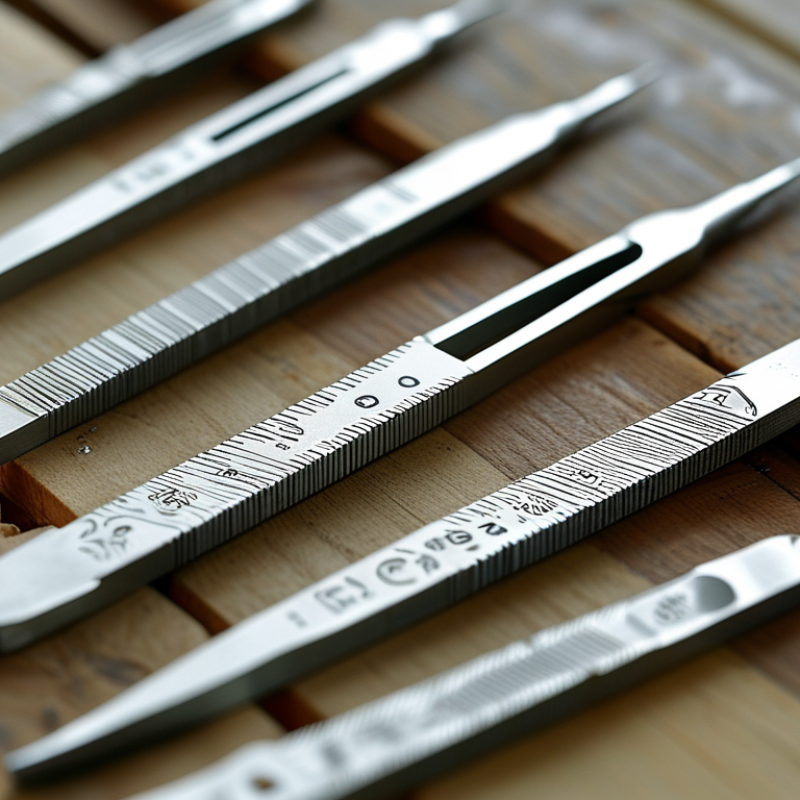
PTFE tweezers are precision tools made with polytetrafluoroethylene, a low-friction material with strong chemical resistance. They help reduce scratching on delicate surfaces and resist contact with many laboratory chemicals. However, PTFE is softer than stainless steel. Sharp edges can deform under force.

Their common applications include handling small electronic parts, microscope samples, membranes, filters, and sensitive optical components. They are also useful near corrosive liquids because PTFE does not react easily with many chemicals.

In a practical bench test, gently lifting a thin film is safer with broad, smooth tips. Narrow tips suit tiny components. Tip shape matters greatly.

Online listings require careful reading. Check whether the entire tweezer is PTFE or only the tip coating. Confirm length, tip width, surface finish, and stated temperature range. A plain product photograph may hide uneven alignment. That happened to me once with an inexpensive tool, and the tips met poorly. I should have requested a technical drawing.

Avoid assuming “chemical resistant” means universally safe. Compatibility depends on concentration, temperature, and exposure time. A supplier’s material data sheet offers stronger evidence than a short sales description. Also inspect customer photos for burrs, warping, and poor closure. Choose a shape that matches the task, not merely the lowest price. A small test first.

Define the Required Tip Shape, Size, and Handling Performance

7 Tips for Buying PTFE Tweezers Online
Define the Required Tip Shape, Size, and Handling Performance
Tip 1
Define the work before opening a shopping page. Fine pointed tips suit tiny components and microscope work. Flat tips provide broader contact for films, seals, or delicate surfaces. Curved tips can improve access inside narrow spaces, but they may reduce visibility. Measure the target part first. A 0.5-millimeter gap needs a different tool from a 3-millimeter surface.
Tip 2
Check size and handling performance together. Long tweezers reach recessed areas, while short tweezers usually offer better control. Look for tip alignment, smooth closing, and consistent spring tension. The jaws should meet evenly without forcing them. Very soft tension feels comfortable, yet it may cause slipping. Very stiff tension can quickly fatigue your fingers. I once chose a narrow tip by appearance alone; it scratched the workpiece because the pressure was poorly controlled.
Tip 3
Ask for clear product details, not attractive photographs alone. Confirm PTFE grade, temperature range, chemical compatibility, and dimensional tolerances. A reliable seller should provide close-up images and explain whether the tips are molded or machined. Read reviews for real handling details, such as burrs, uneven jaws, or a loose grip. Check the return policy carefully. Online images can hide small defects. For clean work, confirm packaging and surface cleanliness before ordering.

Verify Material Quality, Temperature Resistance, and Chemical Compatibility

7 Tips for Buying PTFE Tweezers Online?

When buying PTFE tweezers online, inspect the material description carefully. “PTFE-coated” is not the same as solid PTFE. Coatings may wear through at the tips or edges. Look for stated composition, manufacturing details, and close-up photographs. Check whether the jaws close evenly. Uneven contact can damage delicate components. Read reviews for practical evidence, especially after repeated use. I once trusted a smooth product photo and overlooked its thin coating. That was a costly assumption.

Temperature resistance needs more than one impressive number. Check both continuous-use and short-term temperature ratings. A tweezer used near a heated plate may soften, deform, or lose alignment. Confirm whether the rating applies to the complete tool or only its tips. Also examine the handle material. It may tolerate less heat than PTFE. Chemical compatibility requires similar care. Compare the chemical, concentration, temperature, and contact time with the supplier’s data. PTFE resists many aggressive chemicals, but seals, adhesives, and metal cores may not.

Ask for a technical datasheet before ordering. A clear seller should provide dimensions, tolerance information, and material specifications. Verify that the listed tip width matches your work. Fine tips suit microscope tasks, while broader jaws provide better control. Consider sterile or contamination-sensitive applications separately. Online descriptions can be incomplete. That deserves caution. If the seller cannot explain a rating, do not treat it as verified. My own selection process still needs improvement; I now record the operating temperature and chemicals before comparing prices.

7 Tips for Buying PTFE Tweezers Online? - Verify Material Quality, Temperature Resistance, and Chemical Compatibility

Tip What to Verify Practical Information Evidence to Request Online Warning Signs
1. Confirm the Base Material Check whether the working surfaces are made from PTFE rather than only coated with a thin PTFE layer. Solid PTFE is valued for low friction, non-stick behavior, and broad chemical resistance. A metal core may still be present in reinforced or hybrid designs. Look for a material specification such as “virgin PTFE,” “filled PTFE,” or a clearly identified substrate and coating thickness. The listing says only “non-stick,” “plastic,” or “Teflon-like” without identifying the actual material.
2. Check Material Grade and Fillers Determine whether the tweezers use virgin PTFE or a filled grade containing materials such as glass fiber, carbon, or graphite. Virgin PTFE is generally preferred for clean handling and electrical insulation. Filled grades can improve stiffness or wear resistance but may alter purity, friction, and conductivity. Request a technical datasheet, material declaration, or certificate identifying the PTFE grade and filler content. No information is provided about fillers, additives, colorants, or potential contamination.
3. Verify Temperature Resistance Review the continuous-use and short-term temperature limits, not just a single maximum temperature. PTFE commonly supports continuous service around 260°C (500°F), but the actual limit depends on design, load, exposure time, and any metal or adhesive components. Ask for a temperature rating with test conditions and confirm whether the rating applies to the complete tweezer or only the PTFE material. The page lists an unusually high temperature without test conditions or distinguishes no continuous-use limit from peak exposure.
4. Review Chemical Compatibility Match the tweezers with the chemicals, concentration, temperature, and contact time in your application. PTFE resists many acids, bases, solvents, and corrosive chemicals, but compatibility can change at high temperature or with highly reactive fluorinating or alkali-metal systems. Request a chemical-resistance chart and check the compatibility of the full assembly, including tips, coatings, springs, and adhesives. The listing claims “resistant to all chemicals” without identifying concentration, temperature, or component materials.
5. Match the Tip Design to the Task Compare straight, angled, pointed, blunt, serrated, and broad tips with the size and fragility of the objects being handled. Fine pointed tips improve access to small parts, while blunt or broad tips reduce marking and distribute gripping force. PTFE is softer than many metals and can deform under excessive force. Check dimension drawings, tip width, working length, closure force, and close-up photographs of the tip alignment. Only a generic product photo is shown, with no dimensional drawing or information about tip alignment.
6. Check Cleanliness and Electrical Requirements Confirm whether the tweezers are suitable for cleanroom, laboratory, or static-sensitive work. Unfilled PTFE is electrically insulating and may accumulate static charge. Cleanliness, outgassing, and particle control depend on manufacturing and packaging, not PTFE alone. Request cleanliness grades, cleaning methods, packaging details, surface-resistivity data, or an ESD specification when relevant. The product is marketed for sensitive environments without data on cleaning, packaging, static behavior, or particle control.
7. Compare Dimensions, Tolerances, and Returns Verify overall length, tip geometry, dimensional tolerances, quantity, and the online seller’s return policy. Consistent dimensions and aligned tips are important for repeatable handling. A return option is useful because stiffness, grip, and tip fit are difficult to judge from photographs. Check a dimensioned drawing, product inspection information, lot traceability, delivery condition, and return terms for unused or chemically exposed items. The listing uses approximate dimensions only, omits tolerances, or excludes returns without explaining quality-control procedures.

Note: Temperature and chemical-resistance values are general PTFE reference ranges. Always confirm the supplier’s data for the complete tweezer assembly and the exact operating conditions.

Compare Sellers, Product Specifications, Pricing, and Customer Reviews

When buying PTFE tweezers online, compare sellers before comparing prices. Look for clear contact details, return terms, and a product data sheet. A reliable seller should explain the PTFE grade, tip shape, length, and temperature range. Vague listings create avoidable risks. I have found that precise measurements matter more than polished product photos, especially when handling tiny components.

Check whether the specifications match your actual work. Fine, pointed tips suit delicate positioning, while wider tips offer better control. Confirm surface texture, flexibility, chemical resistance, and antistatic properties when relevant. Some listings mention PTFE but omit the material grade. That omission deserves attention. Compare the full price, including shipping, taxes, replacement costs, and minimum order quantities. The cheapest option may become expensive after one damaged pair.

Customer reviews can reveal practical details that specifications miss. Read recent comments and look for repeated complaints about loose tips, uneven alignment, or poor packaging. Reviews with close-up photos are more useful than short ratings. Still, reviews are imperfect evidence. A few enthusiastic comments cannot replace consistent documentation. I would also check whether the seller responds professionally to criticism. That response shows more than marketing language. Before ordering several pairs, test one under normal handling conditions and inspect it under bright light. Small flaws can matter.

Check Shipping Terms, Return Policies, and Product Authenticity Before Buying

When buying PTFE tweezers online, inspect shipping terms before comparing prices. Confirm the carrier, dispatch location, delivery window, tracking method, and customs responsibility. A low listed price may exclude duties or handling fees. Ask whether the tweezers arrive in sealed packaging, especially when cleanroom work is involved. The NRF and Appriss Retail 2023 report estimated that 17.6% of online purchases were returned. Clear return instructions matter.

Read the return policy line by line. Check the allowed period, inspection rules, restocking charges, and refund method. Some sellers reject tools with bent tips, residue, or opened protective packaging. Photograph the parcel before opening it. Keep the invoice and shipping label. Small details help when a delivery arrives late or damaged. I once underestimated packaging quality; a rigid tip guard would have prevented unnecessary inspection concerns.

Authenticity needs more than a product photo. Request the material specification, PTFE grade, dimensional tolerance, and a certificate of conformity when precision matters. Compare the stated temperature and chemical-resistance claims with an independent technical datasheet. The OECD and EUIPO reported that counterfeit goods represented up to 3.3% of global trade in their 2019 study. That figure does not prove a specific listing is false, but it supports careful verification. Check the seller’s physical address, contact response, batch information, and consistent product measurements. If the listing promises “pure PTFE” without evidence, pause. Cheap is not proof. Neither is polished packaging.

7 Tips for Buying PTFE Tweezers Online

Check shipping terms, return policies, and product authenticity before buying. The chart highlights two PTFE temperature references that can help you assess whether a product listing provides meaningful technical information.

PTFE melts at approximately 327°C, while a commonly cited upper continuous-use temperature is about 260°C, depending on the grade, design, and operating conditions. Before checkout, confirm the material specification, tip dimensions, temperature limits, chemical compatibility, shipping time, tracking availability, return conditions, and evidence of product authenticity. Values may vary by manufacturer and product construction.