Leave Your Message

China Top PTFE Evaporating Dish Supplier How to Choose?

Choosing a China-based Ptfe Evaporating Dish supplier requires more than comparing prices and product photos. Laboratory users must examine material purity, thermal resistance, dimensional accuracy, and supplier reliability. A dish may look flawless online, yet its rim can warp after repeated heating. Small details matter.

Roy Plunkett, the chemist credited with discovering PTFE, reportedly recalled, “I thought it was interesting.” That curiosity remains valuable when evaluating laboratory equipment. Buyers should ask how the supplier verifies PTFE quality, controls molding temperature, and checks each dish before shipment. Request material specifications, production photos, inspection records, and a sample when possible.

Look closely at practical features. Does the dish have a smooth inner surface? Is the wall thickness consistent? Can it tolerate contact with common acids, solvents, and concentrated samples used in evaporation work? A dependable supplier should explain these limits clearly, rather than promise universal resistance.

Supplier experience also matters. Review export history, laboratory applications, packaging methods, and responses to technical questions. A supplier serving universities, pharmaceutical laboratories, or chemical manufacturers may demonstrate stronger process control. However, reputation alone is insufficient.

Check the evidence.

This guide explains how to compare China’s leading Ptfe Evaporating Dish suppliers through technical, commercial, and service-based criteria. It also considers common selection mistakes, including choosing the lowest quote without confirming tolerances or testing methods. Some recommendations may not fit every laboratory. That is worth acknowledging. Vessel size, heating conditions, cleaning routines, and sample chemistry can change the best choice.
China Top PTFE Evaporating Dish Supplier How to Choose?

What Is a PTFE Evaporating Dish and Where Is It Used?

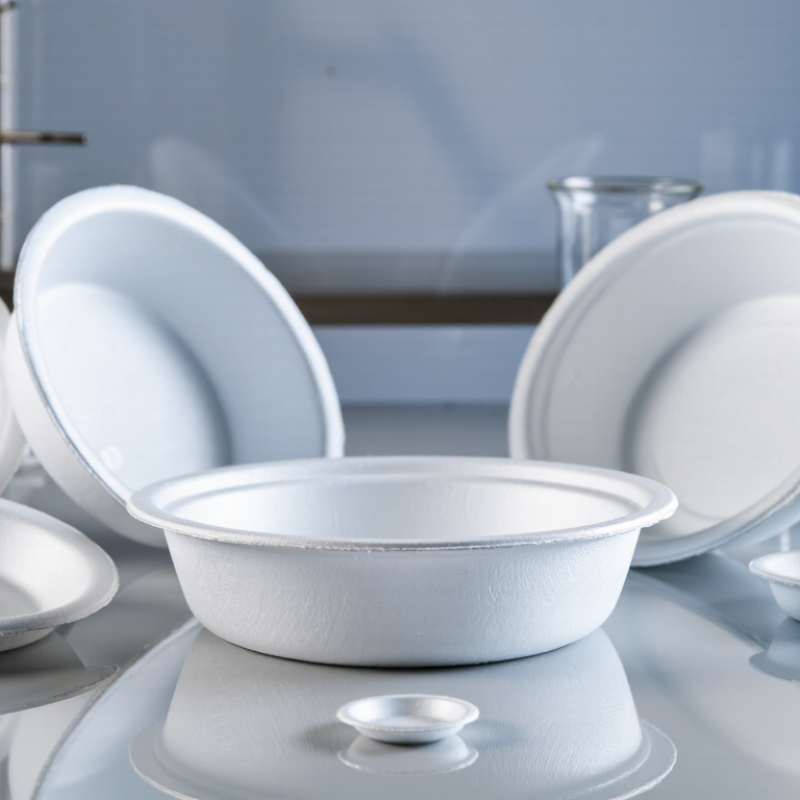
A PTFE evaporating dish is a shallow laboratory vessel made from polytetrafluoroethylene. It holds solutions while solvents evaporate under controlled heating. PTFE offers strong resistance to many acids, bases, and organic chemicals. Its low surface energy also helps dried residues release more easily. This matters during sample preparation, concentration, and gravimetric analysis. The dish feels light, but it is not disposable by nature.

Laboratories commonly use PTFE dishes for water testing, pharmaceutical research, chemical synthesis, and trace-metal preparation. A 2024 Grand View Research report estimated the global fluoropolymer market at about USD 8.5 billion in 2023. MarketsandMarkets also forecasts continued fluoropolymer growth through 2028. These figures do not measure evaporating dishes directly. They show wider demand for chemically resistant materials. That distinction is important.

A reliable supplier should provide virgin PTFE, stable wall thickness, clear dimensions, and documented temperature limits. Many laboratory users work near 200°C, although the actual limit depends on design and exposure time. Never treat chemical resistance as unlimited. Molten alkalis, sharp tools, and prolonged overheating can damage the dish. A scratched surface may retain contamination. That is easy to overlook. Before choosing, request batch inspection records, material certificates, and cleaning guidance. A dish that looks identical may perform differently after repeated heating. Reflecting on that risk is worthwhile.

China Top PTFE Evaporating Dish Supplier: How to Choose?

What Is a PTFE Evaporating Dish and Where Is It Used?

A PTFE evaporating dish is a chemically resistant laboratory vessel used to concentrate solutions, evaporate solvents, and prepare samples. PTFE is suitable for many acids, bases, and organic solvents, with a commonly cited continuous-use temperature limit of approximately 260°C. The reference temperatures below help users evaluate whether a PTFE dish is appropriate for a particular evaporation process.

Water, ethanol, and acetone evaporate at much lower temperatures than PTFE’s continuous-use limit. However, PTFE should not be exposed to direct flame, and the actual operating limit depends on heating time, chemical composition, and laboratory equipment.

Which Material and Performance Features Should You Evaluate?

Choosing a PTFE evaporating dish starts with material chemistry, not price. Virgin PTFE offers excellent resistance to acids, bases, and many solvents. NIST data places its melting point near 327°C. However, routine laboratory heating should remain well below this value. PTFE also transfers heat slowly, with typical thermal conductivity near 0.25 W/m·K. Uneven heating can still cause local stress.

Check whether the dish uses virgin, filled, or recycled PTFE. Filled grades may improve stiffness, but additives can introduce extractables or trace contamination. For analytical work, request a material certificate, batch traceability, and cleanliness data. The 2024 global PTFE market report by Grand View Research estimated continued growth through 2030, but market growth does not prove product quality. That distinction matters.

Look closely at performance details. A reliable dish should have uniform walls, a smooth inner surface, stable dimensions, and a clearly stated temperature range. Ask for thermal cycling results, chemical compatibility testing, and dimensional tolerances. ISO 17025-accredited testing adds stronger evidence when contamination control is important. PFA may suit applications needing greater transparency, while PTFE usually offers stronger general chemical resistance and lower cost. Not always.

In practice, inspect the rim and base under bright light. Warping, pinholes, or rough machining marks can trap residues. Supplier claims deserve verification. One overlooked issue is heat-source matching; even excellent PTFE can fail under concentrated flame exposure or careless cooling.

How to Compare China-Based PTFE Evaporating Dish Suppliers?

China Top PTFE Evaporating Dish Supplier: How to Compare China-Based Suppliers?

China-based PTFE evaporating dish suppliers should be compared through measurable evidence, not catalog photos. A 2024 MarketsandMarkets assessment reports steady growth in the global PTFE market, driven partly by chemical and laboratory applications. This growth attracts capable factories, but also inconsistent quality. Request material certificates, production records, and batch traceability for every quotation. Check PTFE purity, wall thickness, dish diameter, usable volume, and stated temperature range. Small differences matter during repeated heating.

Ask whether testing follows documented procedures under an ISO/IEC 17025-accredited laboratory. Supplier audits should review molding equipment, dimensional inspection, cleaning controls, and packaging. A practical sample test is revealing. Weigh the dish, inspect its rim under magnification, and test whether it remains stable after repeated heating and cooling. Do not trust one perfect sample.

Compare total cost, not unit price. Include tooling, sampling, freight, export packing, inspection, and replacement risk. The 2023 DHL Global Connectedness Index shows supply chains remain exposed to transport and trade disruptions, so lead-time evidence deserves attention. Ask for recent delivery records and a written response plan. Some suppliers provide impressive data sheets but vague answers. That is a warning. Procurement teams should also question their own assumptions: a lower MOQ may hide weaker process control, while a higher temperature claim may lack test conditions. Reliable suppliers explain limits clearly, even when the answer is inconvenient.

China Top PTFE Evaporating Dish Supplier How to Choose? - How to Compare China-Based PTFE Evaporating Dish Suppliers?

Comparison Dimension Practical Reference or Target Evidence to Request from the Supplier Suggested Weight Evaluation Guidance
PTFE Material Grade Virgin PTFE is generally preferred for laboratory evaporating dishes where chemical purity and low contamination are important. Material declaration, grade information, certificate of analysis, and confirmation of whether fillers or recycled PTFE are used. 15% Give higher scores to suppliers that clearly identify the PTFE grade and provide batch-level documentation.
Temperature Capability PTFE is commonly specified for continuous service up to approximately 260°C, but the actual limit depends on grade, load, heating method, and product design. Technical data sheet stating continuous-use temperature, short-term exposure limit, and heating or cooling restrictions. 10% Reject suppliers that quote only a high maximum temperature without explaining test conditions or usage limits.
Chemical Resistance PTFE offers broad resistance to many acids, bases, solvents, and corrosive chemicals; compatibility must still be checked for the specific chemical, concentration, and temperature. Chemical compatibility chart, application references, and written confirmation for the intended chemicals. 15% Prefer suppliers that assess the actual application rather than making an unlimited “chemical resistant” claim.
Dimensional Accuracy Diameter, height, wall thickness, flatness, and capacity should match the approved drawing or sample. Tolerances must be agreed before production. Dimensioned drawing, tolerance table, first-article inspection report, and sample measurement record. 15% Higher scores should go to suppliers using calibrated measuring equipment and documented inspection procedures.
Surface Finish and Cleanliness The dish should have a smooth, crack-free, non-abrasive surface without visible chips, burn marks, embedded particles, or machining residues. Inspection standard, product photographs, cleaning process, packaging method, and acceptance samples. 10% Use a physical sample to evaluate surface quality; photographs alone are not sufficient for final approval.
Manufacturing Process Compression molding, machining, or a combined process may be suitable. The process should be selected according to size, tolerance, surface requirements, and order volume. Process flow chart, production equipment list, mold information, and process-control records. 10% A suitable process and stable process control are more important than the process name alone.
Quality Control System A reliable supplier should control incoming material, production parameters, dimensions, appearance, packing, and traceability. Quality manual, inspection checklist, nonconformance procedure, calibration records, and sample inspection report. 10% Score suppliers higher when quality records are consistent, dated, and traceable to production batches.
Customization Capability Common customization items include diameter, depth, wall thickness, pouring edge, identification marks, packaging, and special tolerances. Previous non-confidential samples, engineering drawing review, tooling quotation, and prototype schedule. 5% Choose a supplier that can confirm design feasibility before accepting the purchase order.
Sample and Pre-Production Approval A representative sample should be tested for dimensions, appearance, chemical application, heating conditions, and packaging suitability before mass production. Sample cost, sample lead time, approval form, revision-control method, and retained reference sample policy. 5% Do not approve mass production solely from catalogue images or general product descriptions.
MOQ, Lead Time, and Capacity MOQ, tooling time, production lead time, and monthly capacity vary by size, process, customization, and order quantity. Written quotation showing MOQ, sample lead time, production lead time, capacity, and delivery terms. 5% Compare lead times using the same product specification and order quantity; avoid comparing unqualified estimates.
Packaging and Export Readiness PTFE dishes should be protected from deformation, abrasion, contamination, and impact during storage and transportation. Packaging photographs, carton specifications, labeling details, export documentation capability, and damage-claim procedure. 5% Select packaging based on product geometry and shipping conditions, not only on the lowest packaging cost.
Recommended Supplier Selection Method: Shortlist suppliers that provide complete technical documentation, compare samples using the same checklist, assign scores according to the suggested weights, and verify the final specification in a signed quotation or purchase agreement.

What Quality, Safety, and Certification Standards Should You Check?

Choosing a PTFE evaporating dish starts with material traceability. Ask for the resin grade, batch number, and manufacturing date. A reliable supplier should provide test records referencing ASTM D4894 or an equivalent material standard. Check PTFE purity, wall uniformity, surface smoothness, and dimensional tolerance. Small scratches can trap residues and affect repeated heating cycles.

Safety needs more than a temperature claim. Request a validated operating range, thermal expansion data, and cleaning instructions. ISO 17025 laboratory reports are stronger when they identify test methods and measurement uncertainty. ISO 9001 certification supports process control, but it does not prove product performance. A certificate alone is not enough. The U.S. FDA regulation 21 CFR 177.1550 can help verify suitable PTFE resin applications, where relevant. Still, laboratory use may require stricter evidence.

The OECD’s 2021 PFAS terminology report identified more than 4,700 related substances, so raw-material declarations deserve careful review. Ask whether processing aids, pigments, or recycled fluoropolymer content are present. Batch-specific declarations are more useful than generic brochures. I would also request abrasion, extractables, and heat-aging results from an independent laboratory. These tests cost more, and smaller suppliers may resist them. That resistance is a warning, though not absolute proof. Inspect sample dishes under bright light. Look for warped rims, cloudy areas, pinholes, and unstable bases before placing a larger order.

How Can You Select the Right Supplier for Your Laboratory Needs?

Selecting a PTFE evaporating dish supplier requires more than comparing online prices. Laboratory users should verify material grade, wall thickness, dimensions, and temperature limits. Quality PTFE generally supports continuous use near 260°C, but actual performance depends on formulation and processing. Ask for a certificate of analysis, batch number, and documented inspection results. ISO/IEC 17025 emphasizes traceable testing and competent laboratory processes, making supplier documentation an important reliability signal.

Market data also supports careful sourcing. Grand View Research reported that the global PTFE market reached approximately USD 3.8 billion in 2023, with continued growth expected through 2030. A growing market can improve availability, but it may also increase inconsistent production. In practical purchasing, inspect the dish after repeated heating. Look for warping, surface scratches, discoloration, or residue retention. I have learned that a low price can hide poor dimensional control. Still, one visual inspection is not enough.

Tips: Request a sample before placing a bulk order. Test it with your real solvent, heating cycle, and residue type. Confirm whether the supplier can provide stable lot-to-lot quality, replacement terms, and realistic lead times. Check packaging carefully; a scratched rim can affect pouring and cleaning. Supplier responses should be specific, not vague. If technical answers change between emails, pause the purchase. ASTM material references can help, but they do not replace application testing or independent verification.