How to Choose PTFE Magnetic Stir Bars in 2026
Choosing Ptfe Magnetic Stir Bars in 2026 is less about picking the longest bar and more about matching the bar to the vessel, liquid, and mixing task. A 25 mm bar may work neatly in a small beaker, yet slip in a viscous sample or a flask with a rounded base. The details matter: vessel geometry, liquid depth, speed, temperature, and chemical compatibility all affect coupling and mixing. Small mismatch, visible results.
Grand View Research’s 2024 laboratory equipment market report offers useful context on broader equipment demand, but it does not provide a stir-bar-specific forecast. That distinction matters. Buyers should not treat broad market growth as proof that one bar design suits every process. For material verification, ASTM D4894 provides a relevant specification for PTFE molding and extrusion materials; it is not, however, a performance test for finished stir bars. Product specifications and application trials still matter.
Physicist Richard Feynman cautioned, “The first principle is that you must not fool yourself—and you are the easiest person to fool.” Applied here, that means checking supplier data against the actual setup, rather than trusting a label or a familiar size. In 2026, a sound choice should consider bar shape, magnet strength, coating integrity, and the consequences of a lost coupling. One practical test helps: run the intended liquid in the intended vessel. Watch the vortex. Listen for chatter. The choice may still involve trade-offs, especially with unusual vessel bottoms or demanding samples. That uncertainty deserves attention, not a confident guess.

What PTFE Magnetic Stir Bars Are and How They Work
A PTFE magnetic stir bar is a small magnet sealed inside a smooth, white polymer coating. The internal magnet responds to the rotating magnetic field beneath the vessel. As the stir plate turns, the bar follows and circulates the liquid. No shaft enters the container. That matters when keeping a sample enclosed or reducing contact with moving parts.
PTFE is valued for its low friction and broad chemical resistance. The bar can glide across a glass beaker’s bottom while mixing aqueous solutions, solvents, or other compatible liquids. Still, “chemically resistant” does not mean resistant to everything. Strongly reactive conditions, high temperatures, or a worn coating may change what is suitable. Check the maker’s temperature and chemical compatibility guidance for the exact bar.
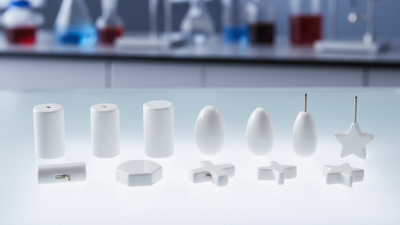
Shape and size affect how smoothly a bar turns. A short cylindrical bar may suit a narrow vial, while a longer bar can circulate liquid in a wider beaker. If the bar rattles, slips, or collects at the vessel wall, it may be too large, poorly centered, or mismatched to the stir plate. A pivot ring can help reduce surface contact, but it is not always necessary. Inspect the coating for cracks or chips before use; a damaged bar is not worth trusting with a sensitive sample.
How to Choose the Right Shape and Size for Your Vessel
Choose the bar against the vessel’s internal base, not its stated volume alone. A practical starting point is a bar about one-third to one-half of the base diameter.
For a 60 mm beaker base, test a 20–30 mm bar. It should rotate freely, with visible clearance from the wall. Too short, and the liquid may barely move; too long, and the bar can knock or wobble.
These are starting proportions, not a validated universal specification. Industrial mixing guidance stresses that vessel geometry and operating conditions affect mixing performance
(Paul, Atiemo-Obeng and Kresta, Handbook of Industrial Mixing, 2004).
Shape matters, too. A cylindrical bar suits many flat-bottom vessels, while a pivot-ring style can help maintain rotation at higher speeds or in rounded-bottom flasks. Test with the actual liquid: viscosity, fill depth, and vessel shape can change the vortex.
Start slowly. Watch for the bar slipping, striking the glass, or pulling air into the liquid. A 95% blend-uniformity endpoint is commonly used in mixing studies, but visual clarity alone cannot confirm it.
One thing is easy to miss: a bar that works in water may stall in a thicker solution. Recheck after changing the liquid or fill volume, and record the bar length, vessel dimensions, and speed.
How to Check Chemical, Temperature, and Speed Compatibility
Before choosing a PTFE magnetic stir bar, check the full chemical mixture, not just its main ingredient. PTFE resists many acids, bases, and solvents, but heat, concentration, and exposure time can change material performance. The bar’s magnetic core and end seals may also be less resistant than its coating. Check the vessel and chemical supplier’s compatibility data. Look for swelling, cracks, or exposed metal after a trial run. Small defects matter.
Temperature ratings need context. Engineering data commonly place PTFE’s continuous-use limit near 260°C, while its melting point is about 327°C. These are not interchangeable limits. ASTM D3418 describes a differential scanning calorimetry method for measuring polymer transitions; it does not certify a stir bar’s safe working temperature. The bar’s assembly may have a lower limit, so check its specification. Speed matters, too. Start slowly, then increase until the liquid forms a steady vortex without the bar slipping or striking the vessel. A longer bar can improve mixing in a wide beaker, but it may decouple at high speed. Slightly inconvenient, perhaps. Record the liquid, temperature, vessel, and stable speed during testing; repeatability is easy to overlook.
How to Compare Magnetic Coupling and Stirring Performance
When comparing PTFE magnetic stir bars, separate coupling from mixing. Coupling is the magnet’s ability to keep the bar rotating; stirring performance is how well that rotation moves the liquid. A bar may spin smoothly in a beaker yet lose its grip in a narrow flask, where the vessel bottom and magnet spacing change the effective magnetic field.
Small gap, big effect.
Use a repeatable bench test: keep the vessel, liquid volume, temperature, and drive setting constant, then record the speed at which the bar begins to wobble or decouple. Note vortex depth and whether solids remain near the bottom. IAPWS’s 2008 water-viscosity formulation gives about 0.890 mPa·s at 25°C and atmospheric pressure. That is a useful low-viscosity baseline, not a guarantee of performance in thicker solutions. ASTM D2196 provides methods for measuring apparent viscosity in non-Newtonian materials; measuring your sample is more useful than guessing from appearance. I still treat a deep vortex as a warning, not proof of good mixing. Choose bar length and shape for the vessel, then verify under the actual load. One caveat: PTFE’s low-friction surface does not prevent magnetic decoupling. The test can be imperfect, especially if room temperature drifts.
How to Inspect, Clean, and Maintain Stir Bars in 2026
In 2026, inspect PTFE magnetic stir bars before each run. Look for chips, cracks, rough seams, discoloration, or a loose end cap; damage can trap residue or expose the magnet. Roll the bar on a clean, flat surface. If it wobbles, replace it rather than trusting it in a sensitive assay. ASTM D4894 describes tests for PTFE resin properties, but it does not certify finished stir bars, so inspect the actual item. PTFE technical data commonly gives continuous-use limits near 260°C, while its melting point is about 327°C; these figures vary by grade and are not cleaning-temperature targets.
Tips: Rinse promptly, then wash with a compatible laboratory detergent and a soft, lint-free wipe. Avoid abrasive pads and sharp tools. Rinse thoroughly with purified water and dry fully before storage. Match the cleaning method to the sample and your laboratory’s validated procedure; aggressive solvents may affect end caps or seals even when PTFE itself resists them. Keep clean bars in a covered, labeled container, away from loose metal tools. Small scratches matter.
Record the bar’s size, condition, and cleaning date when repeatability matters. If a bar develops persistent staining, chipped coating, or irregular coupling, retire it. PTFE resists many chemicals, but “resistant” does not mean invulnerable. A quick visual check can miss defects, so inspect under bright light and compare questionable bars with an unused one. I would not reuse a damaged bar just because it still spins.