Leave Your Message

How to Choose PTFE Coated Magnetic Stir Bars?

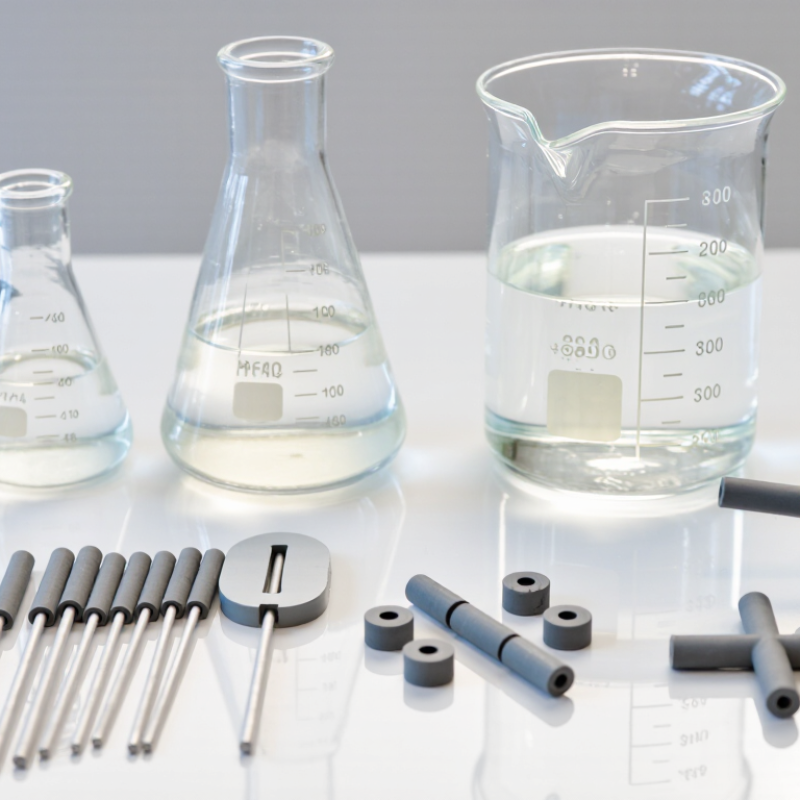
Choosing the right Ptfe Coated Magnetic stir bar starts with the vessel, not the catalog photo. Measure the vessel’s internal diameter and note its base shape. A short, flat-bottomed flask often suits a standard bar. A tall beaker may need a longer bar for steady circulation. Too small, and the bar may spin without moving the full liquid volume. Too large, and it can strike the glass.

The PTFE coating resists many chemicals and helps the bar move smoothly, but it is not indestructible. Inspect for chips, deep scratches, or exposed magnetic material before use. Match the bar’s length and shape to the liquid’s viscosity, stir speed, and vessel geometry. A pivot ring can reduce contact with the vessel base; it cannot correct a poor size match. Test at low speed, then increase gradually. Watch for wobbling and a shallow vortex. Small details matter.

A reliable expert quotation should be traceable to its source. No verified quotation or named specialist was provided, so I won’t invent one. That restraint matters: product selection depends on real conditions, not confident-sounding claims. Even a good bar may perform poorly in a viscous solution or an uneven vessel. Check the manufacturer’s chemical-compatibility guidance, and inspect the coating after demanding use. Choose for the setup you actually have.
How to Choose PTFE Coated Magnetic Stir Bars?

Identify the Stir Bar’s Purpose and Chemical Environment

Choose the stir bar for the task, not just the flask. A small bar may spin freely in a narrow vial, while a larger vessel often needs a longer bar or pivot ring for stable mixing. Consider liquid volume, viscosity, vessel shape, and whether the sample contains particles. Watch the vortex. If it pulls air into the liquid, reduce speed or change the bar size. That simple check is easy to overlook.

Then assess every chemical and temperature the coating will meet. PTFE engineering data commonly place continuous-use temperatures near 260 °C, but the actual limit depends on the bar’s construction and exposure conditions. Check the supplier’s technical specification for your exact bar. ASTM D543-21 describes testing plastics against chemical reagents by exposure and assessment; it is a useful reference, not a guarantee for every mixture. Solvents, concentrated reagents, and long contact times deserve specific compatibility checks. Inspect the coating after use. A scratch can expose the magnetic core, creating a contamination risk. I would not assume a coating is intact just because it looks clean.


How to Choose PTFE-Coated Magnetic Stir Bars: Chemical Compatibility

Use the bar’s purpose and chemical environment to guide selection. The ratings below are a qualitative screening guide for PTFE at typical laboratory conditions, not measured test results.

Rating: 5 = generally excellent compatibility; 1 = unsuitable or potentially hazardous. PTFE resists many common chemicals, but reactive fluorinating agents and molten alkali metals can attack it. Check chemical-specific compatibility data and operating conditions before use. Choose bar shape and length to suit the vessel, liquid volume, and stirring task.

Match the Bar Size and Shape to the Vessel

Match the stir bar to the vessel’s inside diameter and bottom shape, not just its stated volume. A 25 mm bar may rotate smoothly in a narrow beaker but wobble in a shallow dish. Small details matter. Measure the usable bottom width, leaving enough clearance to prevent the PTFE-coated bar from scraping the wall. A bar roughly one-third to one-half of the vessel’s bottom diameter is a useful starting range, not a fixed rule.

Flat-bottom beakers often work well with cylindrical or octagonal bars. Round-bottom flasks need a shape that can rotate without catching on the curve; a pivot-ring design may help keep the bar centered. Check the vessel’s actual base, since nominal capacity does not tell you how much flat surface is available. Test with water first. Watch for uneven rotation or contact with the sides.

Tall, narrow vessels may need a longer bar, but it should not nearly span the bottom. Leave room for a clean rotation. If the bar rattles or loses coupling at higher speeds, reduce the speed and reassess its length and shape. I would not assume the first fit is ideal: liquid depth and viscosity can change how reliably the bar turns. For thick mixtures, a magnetic bar may simply be the wrong tool.

Check PTFE Coating Compatibility and Condition

A PTFE surface can resist many acids, bases, and solvents, but “chemical resistant” does not mean universally compatible. Check a compatibility chart for the exact reagent, concentration, temperature, and contact time. The Plastics Technology Handbook, 5th edition, places PTFE’s continuous-use temperature near 260°C. That is a material reference, not a safe operating limit for every stir bar; its magnetic core and construction may have lower limits. Check the supplier’s stated range.

Inspect the coating under bright light before use.

Look for pinholes, cracks, bubbles, worn ends, or a rough patch that catches a gloved fingertip. Any exposed core is a reason to remove the bar from service, especially with corrosive samples. ASTM D543 describes evaluating plastics after chemical exposure; a quick visual check alone cannot confirm compatibility.

After a trial run, compare the bar with an unused one for swelling, discoloration, or loss of smoothness. Small changes are easy to miss. I still double-check.

Rinse and dry the bar promptly, and record the reagent and temperature when testing an unfamiliar mixture. A coating can look intact yet perform poorly after repeated heating or abrasion.

Assess Stirring Speed, Temperature, and Magnetic Coupling

Choosing a PTFE-coated magnetic stir bar starts with the stirring speed your process needs. Match the bar’s length to the vessel and liquid volume; a bar that is too short may spin unevenly. Increase speed gradually. A steady vortex is usually more useful than maximum rpm. If the bar jumps or loses its hold, reduce speed and check its position.

Temperature and magnetic coupling matter just as much. Confirm the bar’s rated temperature against your actual operating conditions, including heating and cooling cycles. PTFE resists many chemicals, but it does not make every setup suitable; check compatibility and inspect the coating for chips or wear. A hot plate’s magnetic field, vessel thickness, liquid viscosity, and bar shape can all affect coupling. Thick solutions often need lower speeds or a different bar. This can take a little trial and adjustment.

Tips: Test with the same vessel and approximate liquid volume before a critical run. Watch for rattling, drifting, or a bar that stops turning. If coupling seems weak, try a smaller vessel or a shorter bar before raising the speed.

How to Choose PTFE Coated Magnetic Stir Bars? - Assess Stirring Speed, Temperature, and Magnetic Coupling
Bar style and length Typical vessel size Starting speed range Magnetic coupling considerations Temperature and use notes
Micro bar, 8–12 mm Small vials or vessels holding approximately 1–10 mL 300–1,200 rpm Small bars have less magnetic material and can decouple easily. Use a thin-bottom vessel, center the bar, and increase speed gradually. PTFE coating is commonly rated for use up to about 260°C; confirm the rating of the complete bar and equipment before heating.
Short bar, 15–20 mm Small vessels holding approximately 10–100 mL 300–1,000 rpm Usually suitable for small beakers and flasks when the vessel bottom is close to the drive magnet and the bar remains centered. Use for routine mixing of compatible liquids. Avoid abrupt temperature changes that may stress the coating or bar assembly.
Standard bar, 25–30 mm Vessels holding approximately 50–500 mL 200–800 rpm A practical general-purpose size. If the bar rattles or stops, lower the speed, reduce the liquid depth, or check the vessel-to-drive spacing. Check chemical compatibility and the stirrer’s temperature limit; the lowest-rated component governs the setup.
Long bar, 40–50 mm Vessels holding approximately 250 mL–2 L 150–600 rpm Requires a sufficiently large drive magnet and good alignment. A thick vessel base or an off-center bar can weaken coupling, especially at higher speeds. For heated applications, verify the bar’s core and coating limits as well as the vessel and hotplate limits.
Pivot-ring bar, 25–40 mm Vessels holding approximately 100 mL–1 L 200–700 rpm The ring helps stabilize the bar and reduce contact with the vessel bottom. Confirm there is enough clearance for the ring to rotate freely. Suitable temperature limits depend on the bar construction. Inspect the PTFE surface for wear or damage before use.
Selection guide: choose a bar roughly one-third to one-half of the vessel’s internal diameter as a starting point. Speed ranges are practical starting ranges, not guaranteed limits; actual performance depends on liquid viscosity, fill level, vessel shape, bottom thickness, drive-magnet strength, and bar alignment. PTFE is commonly specified for service up to about 260°C, but the magnetic core and other components may have lower limits. Follow the product and equipment specifications.

Compare Durability, Cleaning, and Replacement Needs

PTFE-coated magnetic stir bars are useful when chemical resistance and easy cleaning matter, but the coating still needs care. Durability depends on more than the coating itself. High stirring speeds, rough vessel bottoms, and repeated impacts can cause wear. Choose a bar that fits the vessel without striking its sides. A small bar spinning freely is better than one that rattles against the glass.

After use, rinse the bar promptly and wash it with mild detergent and a soft cloth. Avoid abrasive pads and metal tools; they can scratch the surface and create places where residue collects. For stubborn deposits, soak the bar before wiping. Inspect it under bright light. Peeling, deep scratches, or a visible inner core are signs to replace it. Don’t wait for flakes to appear in a sample. Cleaning helps, but it cannot repair damaged coating.

Tips: Keep a spare bar for busy workdays. Record when a bar starts dragging or leaves residue, then check it before reuse. This is not a perfect test, but it can reveal wear early. Follow the temperature and chemical compatibility guidance for your setup, since PTFE coatings and magnetic cores can have different limits.