Choosing the right Ptfe Measuring Cylinder requires more than comparing prices or capacities. In laboratory work, small design differences can affect transfer accuracy, cleaning time, and chemical compatibility. PTFE offers excellent resistance to many aggressive chemicals and provides a low-friction surface. However, it is not automatically the best choice for every liquid or temperature. A careful selection begins with the actual application.
This guide presents seven practical tips for evaluating a Ptfe Measuring Cylinder. It considers capacity, graduation clarity, dimensional accuracy, wall strength, base stability, temperature limits, and supplier documentation. Experienced laboratory buyers should also check whether the markings remain readable after repeated cleaning. A cylinder that feels smooth may still have unclear graduations. Appearance can mislead. Look for consistent manufacturing, traceable specifications, and realistic tolerance information. If the cylinder will handle corrosive reagents, review compatibility data instead of relying on general claims. If it will be used near heat, confirm the operating range and avoid assumptions. PTFE can resist many chemicals, yet mechanical strength and measurement behavior still require attention. No single cylinder fits every procedure. That is the part many purchasing guides overlook. These recommendations are designed to support sound judgment, not replace laboratory validation. Before routine use, compare the cylinder with a trusted reference and document the result. A short test may reveal more than a polished product description.
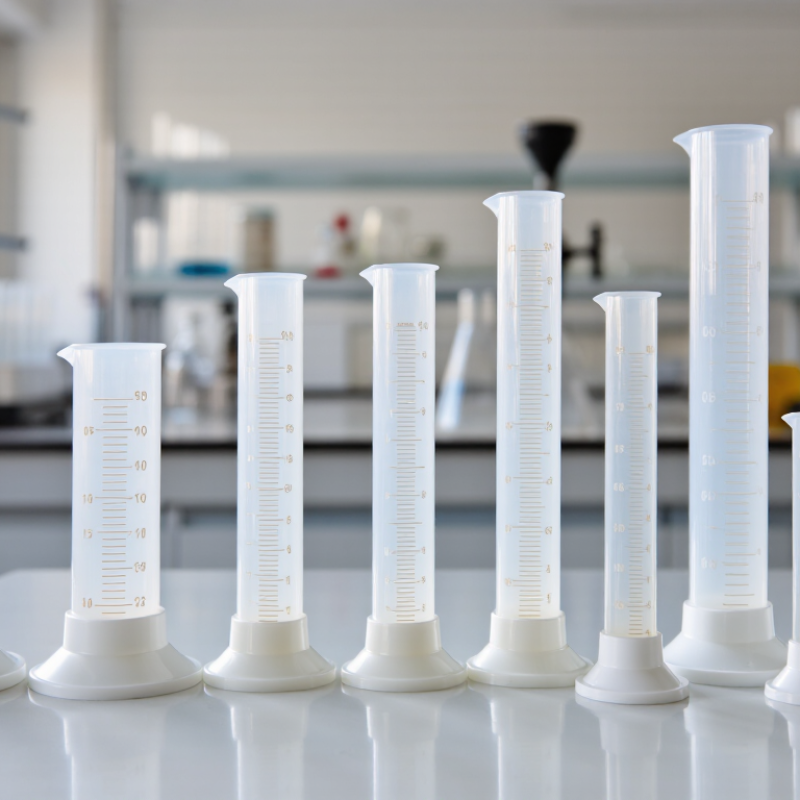
A PTFE measuring cylinder is a graduated vessel made from polytetrafluoroethylene. Its low surface energy helps liquids release cleanly. This matters when handling aggressive chemicals or sticky residues. PTFE also resists many acids, bases, and organic solvents. However, “chemical resistant” is not universal. Check a compatibility chart for every liquid.
Choose the size carefully. Smaller cylinders usually support more controlled readings. Confirm graduation spacing, visibility, and stated tolerance. ISO 4788:2005 offers useful guidance for graduated-cylinder design and reading practice, although it mainly addresses glassware.
Check the material specification too. ASTM D4894 covers PTFE molding and extrusion resin requirements, not complete cylinders. That distinction is easy to miss. Temperature ratings deserve attention. Many PTFE grades perform near 260°C, but pressure, shape, and exposure time can reduce safe performance. Never assume a high-temperature rating applies to the finished vessel.
Look for a stable base and a clearly marked scale. Inspect the rim for chips, warping, or rough edges. A loose cap can also create contamination problems. Cleanability matters. PTFE may reduce residue, but it is not self-cleaning.
The OECD Global Plastics Outlook reports 353 million tonnes of plastic waste in 2019. Longer service life can therefore support better laboratory resource planning. Still, replacement may be wiser after deep scratches or distortion.
Record calibration checks and supplier documentation. Imperfect records weaken otherwise careful measurements. Choose traceability over attractive markings.

7 Tips for Choosing a PTFE Measuring Cylinder?
How to Match Cylinder Capacity and Graduation Accuracy to Your Work
Tip 1: Match capacity to the working volume. Select a cylinder that keeps your liquid near the middle of its scale. Using a 500 mL cylinder for 40 mL can make each reading less meaningful. A smaller cylinder usually gives better visual control.
Tip 2: Check the graduation interval, not only the stated capacity. For routine transfers, 1 mL divisions may be adequate. For sensitive preparation, smaller intervals are preferable, but resolution is not the same as accuracy. ISO 4788:2005 defines requirements for graduated measuring cylinders, yet compliance must be verified for the actual PTFE product. Specifications can differ.
Tip 3: Consider PTFE’s surface behavior. Liquids may cling, spread, or drain slowly, especially when static or contamination is present. Read at eye level and allow drainage time. The meniscus may be difficult to see. I would test the cylinder with the real solvent before purchasing several units.
Tip 4: Review calibration conditions. Temperature can affect volume and reading stability. NIST Technical Note 1297 recommends reporting expanded uncertainty with a coverage factor of k = 2, representing approximately 95% coverage. Ask whether the stated tolerance includes temperature, repeatability, and operator effects.
Tip 5: Do not overtrust neat markings. Inspect zero alignment, scale contrast, wall uniformity, and chemical compatibility. A 100 mL cylinder with 0.5 mL graduations may still be unsuitable for precise 5 mL measurements. Match the cylinder to the task, not the catalog headline.
When choosing a PTFE measuring cylinder, chemical compatibility should guide your decision. PTFE resists many acids, bases, solvents, and corrosive mixtures. This protection is useful during repeated laboratory transfers. However, it is not universal. Check the chemical’s safety data and concentration before purchase. Short exposures differ.
Temperature performance also needs careful attention. PTFE can tolerate a wide temperature range, but the exact limit depends on design, exposure time, and mechanical stress. At elevated temperatures, PTFE expands and may deform under pressure. Thermal cycling can gradually affect graduation accuracy. Not perfectly rigid.
Consider both the working temperature and sudden temperature changes. A cylinder used near its upper limit may require more frequent volume checks. PTFE’s low surface energy helps reduce liquid retention and cleaning effort. Yet its cloudy appearance can make the meniscus difficult to read. Choose clear, durable graduations and compare them with a calibrated reference.
Chemical compatibility alone is not enough. Ask whether the cylinder will face stirring, vacuum, impact, or repeated washing. If accuracy matters, verify dimensional stability at the actual operating temperature. Record unusual changes after use. One practical mistake is assuming room temperature performance applies everywhere. That assumption deserves review before routine testing.
General PTFE compatibility guidance: 5 = excellent resistance, 1 = poor resistance. PTFE is chemically resistant to most strong acids, bases, and organic solvents across ordinary laboratory temperatures, but molten alkali metals and highly reactive fluorinating agents can attack it. Always verify chemical concentration, pressure, exposure time, permeation risk, and the cylinder's actual operating temperature before selection.
How to Evaluate Shape, Stability, and Ease of Handling
When choosing a PTFE measuring cylinder, inspect its shape before considering chemical resistance. A straight, evenly tapered body improves reading and reduces liquid retention.
Tip one: choose a visible graduation area with consistent markings.
Tip two: check the base width and center of gravity on a flat bench. A narrow base may wobble when gloves or tubing contact it.
Tip three: examine the pouring lip for controlled, drip-free transfer. Small details matter.
Tip four: select a grip-friendly profile that remains secure with wet gloves.
Stability also depends on material thickness, temperature, and repeated cleaning. PTFE expands more than glass, so volume readings can shift with temperature. Use it near the calibration temperature whenever practical.
Tip five: verify stated accuracy, graduations, and calibration methods in technical documents.
Tip six: inspect the rim, walls, and markings for distortion before each use.
Tip seven: compare weight and balance with the hand movements your process requires.
I once overlooked a comfortable grip and noticed slower transfers during repetitive work. That mistake changed my selection checklist.
Do not judge handling from photographs alone. Ask for dimensional data, sample testing, or a return option when details remain uncertain.
Choosing a PTFE measuring cylinder requires more than checking its chemical resistance. A reliable cylinder should have a smooth inner wall, even thickness, and a stable base. Inspect the graduations closely. They should remain clear, consistent, and easy to read under laboratory lighting. A rough rim or uneven markings may signal weak manufacturing control.
Check the material certificate when available. It should identify PTFE quality and relevant dimensional tolerances. Confirm that the cylinder suits your chemicals, temperature range, and working volume. PTFE handles many aggressive substances, but it is not automatically ideal for every process. I once saw a cylinder deform after repeated exposure to high heat. The material was suitable, but the operating temperature was not. Small details matter.
Maintenance needs affect the real cost. Rinse the cylinder promptly after use, especially after viscous or staining liquids. Use soft cleaning tools, never abrasive pads. Examine the rim, base, and inner wall for scratches, distortion, or stress marks. Store it upright, away from direct heat and heavy equipment. Periodic volume checks can reveal measurement drift. Do not overlook them. A low-cost cylinder may become expensive if markings fade, cleaning takes longer, or replacement comes quickly. Compare service life, measurement clarity, cleaning effort, and documentation before deciding. The cheapest option is rarely the best value.
| Tip | Selection Dimension | What to Check | Quality Indicators | Maintenance Considerations | Value Assessment |
|---|---|---|---|---|---|
| 1 | Material purity and construction | Confirm that the cylinder is made from PTFE suitable for the intended chemicals and temperature range. Check whether the product is virgin PTFE or a filled grade. | Uniform white or translucent material, smooth internal and external surfaces, no visible bubbles, cracks, discoloration, or embedded particles. | PTFE is chemically resistant but can be scratched by abrasive tools. Avoid metal picks, rough brushes, and unsuitable solvents. | Virgin PTFE is generally preferable for contamination-sensitive work, while filled PTFE may be selected when wear resistance or dimensional stability is more important. |
| 2 | Capacity and graduation readability | Choose a nominal capacity that keeps routine measurements within the useful middle range rather than repeatedly measuring near the minimum or maximum. | Clear, evenly spaced graduations; consistent line depth or marking quality; stable visibility under the laboratory lighting conditions. | Inspect markings after cleaning and exposure to chemicals. Do not use abrasive cleaning that could remove or blur graduations. | A larger cylinder is not automatically better. Match capacity and graduation interval to the required measurement range to reduce waste and reading errors. |
| 3 | Dimensional accuracy and calibration | Review the stated tolerance, reference temperature, calibration method, and whether a certificate or inspection report is supplied. | Published tolerances are easy to find, the calibration basis is documented, and the actual product dimensions are consistent with the specification. | PTFE has a relatively high coefficient of thermal expansion compared with glass, so temperature changes can affect dimensions and readings. | For analytical or regulated measurements, prioritize documented calibration and traceability. For rough transfer work, a lower-cost non-certified cylinder may be sufficient. |
| 4 | Shape, stability, and pouring control | Evaluate the base, wall thickness, balance, pouring lip, and ease of holding with gloved hands. | The cylinder stands level without rocking, has a flat and stable base, and provides a controlled pour with minimal external drips. | Check the base and rim regularly for warping, deformation, or chemical damage. Store upright on a clean, level surface. | A better-designed base and lip can reduce spills, cleanup time, and sample loss, even if the purchase price is higher. |
| 5 | Chemical and temperature compatibility | Compare the intended liquids, exposure time, operating temperature, and cleaning chemicals with the material compatibility information. | The product documentation identifies operating limits and warns about conditions that may cause deformation, permeation, or loss of dimensional stability. | Do not assume chemical resistance means unlimited service life. Inspect for swelling, distortion, surface changes, and persistent contamination. | The best value comes from selecting a cylinder that matches the actual process conditions instead of paying for performance that is not required. |
| 6 | Cleaning and contamination control | Check whether the cylinder can be rinsed, dried, and inspected easily after use, especially when handling viscous, colored, or reactive materials. | Smooth surfaces, minimal crevices, accessible markings, and no manufacturing residue or trapped liquid after normal rinsing. | Use a compatible detergent or solvent, rinse thoroughly, and dry before storage. Keep separate cleaning tools for contamination-sensitive applications. | A cylinder that is easy to clean can lower labor time and cross-contamination risk throughout its service life. |
| 7 | Service life and total cost of ownership | Compare purchase price with expected usage frequency, replacement availability, calibration costs, cleaning time, and the cost of potential spills or failed measurements. | Consistent workmanship, documented specifications, replacement availability, and clear care instructions. | Schedule periodic visual checks and, where measurement accuracy is critical, repeat verification or calibration according to the laboratory quality system. | Calculate total cost using purchase price, expected service life, maintenance effort, calibration needs, and downtime—not price alone. |
Practical evaluation rule: Select the PTFE measuring cylinder only after confirming its capacity, graduation interval, stated tolerance, chemical compatibility, temperature limits, cleaning method, and intended measurement purpose.