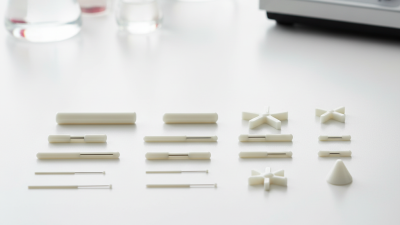
Selecting a reliable supplier for laboratory consumables takes more than comparing prices. A Ptfe Stirrer Bar must fit the vessel, couple effectively with the magnetic stirrer, and withstand the chemicals and temperatures used in the process. Small details matter: bar length, shape, coating quality, and packaging can affect daily work.
This guide introduces ten suppliers serving buyers across different regions. It considers product range, technical documentation, customization options, order support, and international availability. Buyers can use these points to compare options, then confirm specifications directly with each supplier. A clear datasheet should identify dimensions, materials, and relevant operating limits. Ask about samples when performance is uncertain.
Not every supplier presents information in the same way. Some list sizes clearly but provide little detail about coating consistency or inspection. That gap deserves a follow-up question, not a guess. Check current stock, lead times, shipping terms, and product records before placing a large order. Supplier claims can vary, and a polished website is not proof of consistent quality. Real testing may still be needed. A careful comparison helps laboratories choose stirrer bars suited to their equipment and practical requirements.
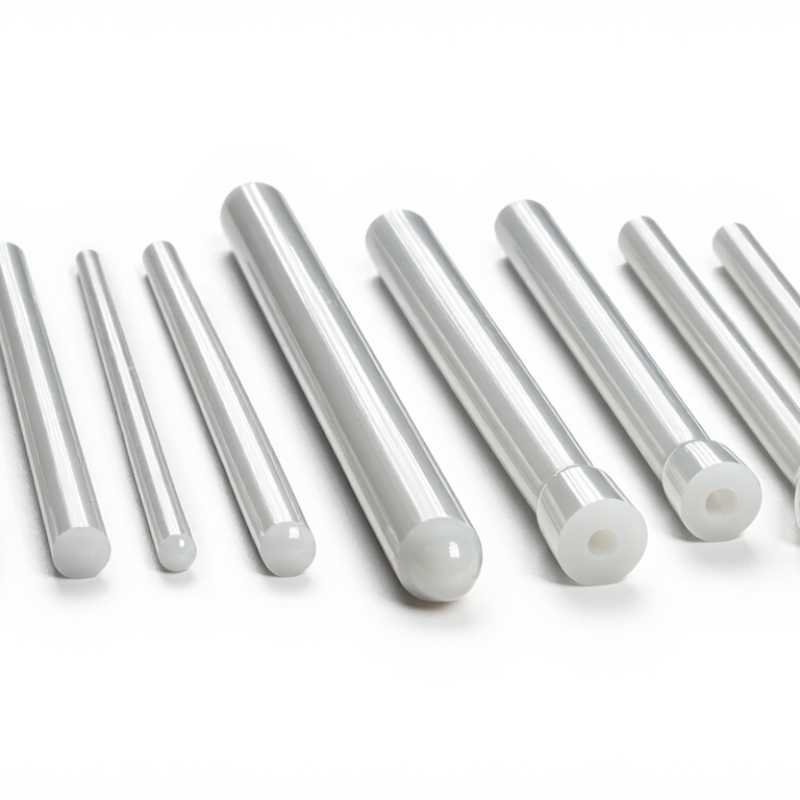
A PTFE stirrer bar is a small magnetic mixer sealed inside a smooth, white polytetrafluoroethylene coating. The coating resists many laboratory chemicals and is easy to rinse, though no material suits every liquid or temperature. Inside, a magnetic core responds to the rotating field of a magnetic stirrer. The bar spins directly in the vessel, mixing liquid without a shaft passing through the container.
Place the bar in a beaker or flask, then set the vessel on the stirrer and increase the speed gradually. A gentle start helps prevent the bar from wobbling or striking the glass. Small details matter. Match the bar’s length and shape to the vessel and liquid volume; an oversized bar may couple poorly, while a tiny one may leave slow-moving areas. For thick liquids or mixtures with particles, a standard bar may not circulate everything evenly. That limitation is easy to overlook. Check the coating for chips or cracks before use, since damage can trap residue or expose the core. After mixing, remove the bar with a suitable magnetic retriever, rinse it, and inspect it again.

Choosing a supplier starts with matching the stirrer bar to the vessel and mixing task. Check the bar’s length, shape, and magnetic response against your stir plate and container. A bar that is too long may strike the vessel walls. A weak magnetic coupling can cause slipping at higher speeds. Small details matter. Also confirm that the PTFE coating suits your chemicals and operating temperature. Ask for clear product specifications rather than relying on a catalog image.
Consistency is important when ordering across multiple batches. Request information about dimensional tolerances, coating quality, inspection procedures, and packaging. These details can help reduce damaged or uneven bars on arrival. A low price may look convincing, but replacement delays can cost more. I would not treat a polished product page as proof of performance; a small sample order can reveal fit and handling issues. Clear answers from a supplier are useful, though no single checklist guarantees a perfect match.
Tips: Compare specifications before comparing prices. Ask about sample availability, lead times, and how defects are handled. Keep one bar from a test order for reference. It is easy to overlook packaging, and sometimes that is where expectations meet reality.
These ten illustrative supplier profiles help global buyers compare sourcing options; they are not a verified ranking of named companies. Supplier 1, based in eastern China, may suit buyers seeking broad size ranges and export-ready packing. Supplier 2, from India, can be assessed for custom dimensions and production flexibility. Supplier 3, in Japan, represents a precision-focused source where dimensional consistency deserves close review. Supplier 4, in South Korea, may offer responsive regional supply for laboratories across East Asia. Fit matters.
Supplier 5, in Germany, is a profile for buyers prioritizing documented quality checks and material traceability. Supplier 6, in the United Kingdom, may appeal to customers needing local technical support and smaller orders. Supplier 7, in the United States, represents domestic inventory and shorter replenishment routes. Supplier 8, in Canada, may serve institutions that value straightforward distribution across North America. Ask for current specifications.
Supplier 9, in Singapore, represents a regional distributor connecting buyers with several manufacturing sources. Supplier 10, in Australia, may be practical for local delivery and reduced transit uncertainty. For each, compare PTFE coating integrity, bar length, magnet strength, and temperature suitability. Request sample bars and inspect them in the actual vessel. A coating can look smooth yet wear sooner than expected. Confirm batch documentation, lead time, packaging, and replacement terms before placing a large order.
Global buyers comparing PTFE stirrer bar suppliers should look beyond catalog size. A useful range includes standard cylindrical bars, pivot-ring designs, and options in several lengths and diameters. For a 100 mL flask, a compact bar may couple smoothly; in a wide vessel, a longer bar can improve circulation. Check whether dimensions are stated clearly and whether samples are available before a large order. Small details matter. A broad catalog is not automatically a better fit.
Quality is easier to assess when suppliers share material specifications, dimensional tolerances, and batch inspection practices. Ask how they check the PTFE coating for chips, uneven edges, or exposed core material. A smooth surface helps cleaning, while consistent geometry supports repeatable mixing. Request documentation, but inspect actual pieces too. Paperwork can miss a rough edge.
Customization can include bar length, diameter, shape, packaging, and labeling for lab inventory. Confirm minimum order quantities, sample lead times, and how changes affect delivery dates. This part gets overlooked. A supplier may offer many options yet communicate slowly, complicating routine purchasing. Compare response clarity and defect-handling terms alongside price. No single checklist catches everything, and a small trial order can reveal issues that specifications do not.
Typical nominal lengths of PTFE-coated magnetic stir bars listed across supplier catalogs. Options vary by supplier; the chart does not rank suppliers or represent market share.
When comparing suppliers, check available lengths alongside coating quality, magnetic-core options, and custom sizing. Confirm exact dimensions and tolerances directly with the supplier.
For global buyers, a PTFE stirrer bar quote should be compared by landed cost, not unit price alone. Include tooling, minimum order quantity, packaging, freight, insurance, and any customs charges. Request the bar’s dimensions, tolerance, PTFE material declaration, batch traceability, and recommended temperature range. Ask how the magnetic core is sealed; small coating defects can affect cleaning and service life. A low unit price can still be a poor buy. Small orders cost more.
Shipping reliability deserves equal attention. UNCTAD’s Review of Maritime Transport 2024 reported that seaborne trade grew 2.4% in 2023, while continued route disruptions created uncertainty for schedules and freight costs. The World Bank’s 2023 Logistics Performance Index assessed 139 economies, underscoring that delivery performance varies by route and market. Request a shipping estimate, dispatch lead time, and tracking details before placing an order. Confirm that packaging protects the bars from scratching and keeps mixed sizes clearly labeled. This comparison is imperfect: sample testing takes time, but it can reveal inconsistent dimensions or magnetic response before a larger purchase. Keep the test record with the supplier’s documents.
| No. | Supplier profile | Typical product / use | Indicative unit price (USD) | Typical MOQ | Compliance and documentation to request | Production lead time | Shipping considerations |
|---|---|---|---|---|---|---|---|
| 1 | High-volume laboratory consumables manufacturer | Standard cylindrical PTFE-coated bars for routine mixing | $0.40–$1.80 | 100–500 pieces | Request material specification, dimensional tolerances, and a lot-specific certificate of analysis if required. Verify any ISO 9001 claim independently. | 2–4 weeks | Consolidated air or sea freight may reduce per-unit freight cost on larger orders; confirm carton dimensions and Incoterms. |
| 2 | Small-batch laboratory ware producer | Mixed-size assortments for teaching and general laboratory use | $0.80–$3.00 | 10–50 pieces | Confirm sizes, shape, magnetic-core description, and whether product-contact material declarations are available. | 1–3 weeks | Courier is often practical for small shipments; check delivery coverage, duties, and taxes for the destination. |
| 3 | Custom-dimension PTFE component supplier | Nonstandard lengths or diameters for specific vessel geometries | $1.50–$6.00 | 50–200 pieces | Agree on a drawing, tolerances, sample approval, and inspection criteria before production; request material traceability if needed. | 3–6 weeks | Allow time for sample review and export packing; specify the named place or port in the agreed Incoterm. |
| 4 | Specialty magnetic stirring accessory supplier | Pivot-ring or other shaped bars for improved centering in compatible vessels | $1.00–$4.50 | 25–100 pieces | Check shape, dimensions, and compatibility with the vessel and stirrer. Ask for a product specification sheet and material declaration. | 2–5 weeks | Request protective packaging to prevent surface damage and a packing list with accurate product descriptions. |
| 5 | Micro-volume laboratory accessory supplier | Miniature bars for small tubes and low-volume mixing | $0.80–$3.50 | 50–200 pieces | Confirm actual dimensions, surface finish, and performance in the intended vessel; request sample units for evaluation. | 2–4 weeks | Use compartmented or sealed packaging to simplify counting and reduce loss during handling. |
| 6 | Large-bar and process-lab accessory producer | Longer bars for larger vessels and higher-volume mixing applications | $2.00–$10.00 | 20–100 pieces | Validate bar dimensions and magnetic coupling with the vessel and stirrer. Request operating guidance; do not assume a universal speed rating. | 3–6 weeks | Longer items may require larger cartons; compare dimensional-weight charges for courier and air freight. |
| 7 | Regional laboratory supplies wholesaler | Common stocked sizes for repeat orders and shorter replenishment cycles | $1.00–$5.00 | 1–20 packs, depending on pack size | Request the manufacturer’s specification and origin information; confirm local labeling and import documentation requirements. | In-stock items: typically 1–10 business days to dispatch | Local stock can reduce cross-border transit, but confirm stock availability and whether prices include local taxes. |
| 8 | Private-label contract manufacturer | Standard or customized bars packed to buyer specifications | $0.60–$3.50 | 500–2,000 pieces | Set written requirements for packaging, labeling, inspection, and change control. Verify that any compliance claims apply to the product and facility concerned. | 4–8 weeks | Plan artwork approval and packaging lead time; agree who handles export documents and import clearance. |
| 9 | Documentation-focused laboratory product supplier | General-purpose bars supplied with more extensive product records on request | $1.50–$7.00 | 25–100 pieces | Specify required records before ordering, such as a certificate of analysis, material declaration, or lot traceability. A certificate of conformity is not a substitute for product-specific regulatory approval. | 2–5 weeks | Confirm that documents travel with the shipment or are provided electronically before customs entry. |
| 10 | Online laboratory equipment distributor | Small quantities of standard sizes for evaluation or urgent replacement | $2.00–$12.00 | 1–10 pieces or packs | Check the listed dimensions, pack quantity, country of origin, and availability of product documentation before purchase. | In-stock items: typically 1–7 business days to dispatch | Compare delivered cost, including shipping, duties, and taxes; confirm whether returns are accepted for opened laboratory supplies. |
Note: These are illustrative supplier profiles, not a verified ranking or named-vendor directory. Price ranges are indicative planning estimates in USD, not live quotations; actual prices depend on size, order quantity, specifications, packaging, and delivery terms. Lead times and freight transit vary by origin, route, carrier, customs, and season. PTFE stir bars commonly use a PTFE outer coating around a magnetic core; request product-specific material and quality documents, and confirm regulatory suitability for your application and destination.