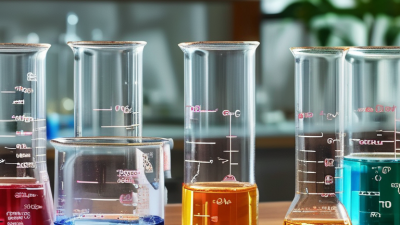
Choosing the right Ptfe Measuring Cylinder requires more than comparing capacities and prices. Laboratories handle aggressive acids, solvents, high-purity reagents, and repeated cleaning cycles. PTFE offers strong chemical resistance and a low-friction surface, making it valuable for demanding analytical environments. However, it is not automatically the best choice for every measurement.
Industry data supports this growing interest in fluoropolymer equipment. Grand View Research reported that the global fluoropolymer market was valued at approximately USD 9.7 billion in 2023, with continued growth expected through 2030. Fortune Business Insights also identifies chemical processing, pharmaceuticals, and electronics as important fluoropolymer applications. These sectors require dependable materials, controlled contamination, and consistent product quality. They also expose weaknesses quickly.
Small details matter. A cylinder may look smooth but have unclear graduations, weak markings, or poor dimensional consistency. ISO 4788 provides useful guidance for graduated measuring cylinders, although buyers should verify whether a specific PTFE model has documented conformity. Manufacturer test reports, batch traceability, wall thickness, temperature limits, and calibration procedures deserve close attention. No ranking is flawless. Supplier claims still need checking.
This guide reviews seven PTFE measuring cylinders for global buyers, focusing on chemical compatibility, volume accuracy, readability, durability, cleaning behavior, and international procurement reliability. The strongest option depends on the liquid, temperature, workflow, and required tolerance. A 100 mL cylinder used beside a fume hood may need different features from a 1,000 mL vessel used in bulk formulation. That distinction is easy to overlook.
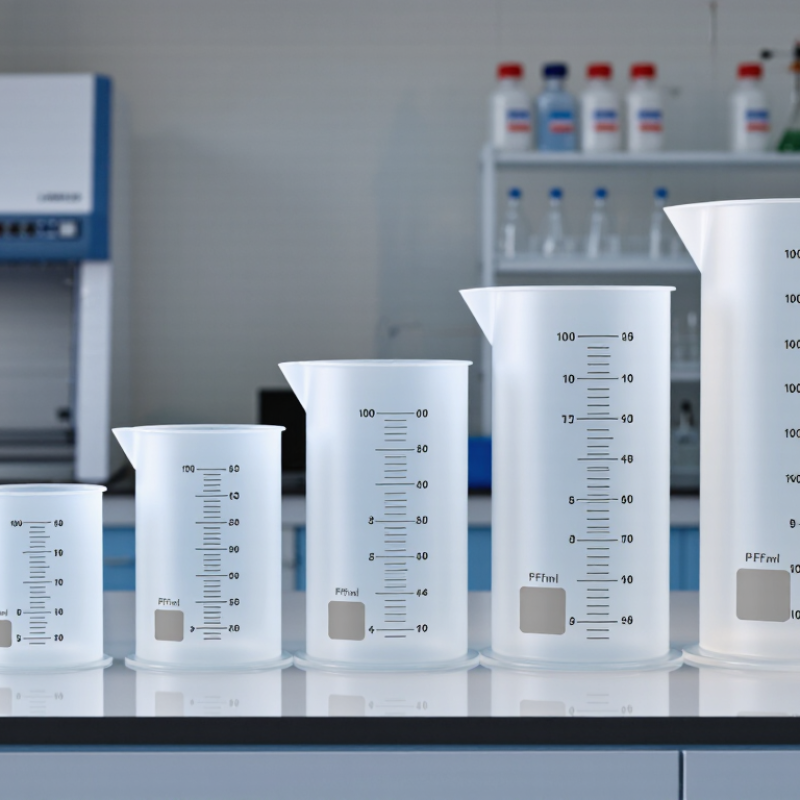
A PTFE measuring cylinder is a graduated vessel made from polytetrafluoroethylene. It measures liquid volume during chemical handling, sample preparation, and laboratory transfer. Unlike glass, PTFE tolerates many aggressive acids, bases, and organic solvents. It is also non-wetting, so droplets usually release more easily from the inner wall. That matters.
The material’s working range is commonly listed near -200°C to 260°C in engineering references. However, temperature changes can affect dimensional stability and volume accuracy. ISO 6706 provides guidance for graduated measuring cylinders, but buyers should verify whether a PTFE model has documented calibration data. It is not automatically a precision instrument. For accurate dosing, a calibrated volumetric flask may remain better.
Material transparency is another practical issue. Many PTFE cylinders are translucent or opaque, making the meniscus difficult to read under weak laboratory lighting. A raised scale, contrasting graduation, and wide base can reduce handling errors. Check the smallest graduation, tolerance, wall thickness, and cap compatibility before purchase.
Regulatory review deserves attention. The OECD’s 2018 report identified 4,730 PFAS-related substances, placing fluoropolymer products within a wider chemical-management discussion. PTFE itself is a polymer, yet manufacturing aids and surface residues may require separate documentation. Ask for composition statements, extractables data, lot traceability, and cleaning instructions. I would not rely on “chemically resistant” alone. That wording is useful, but incomplete.
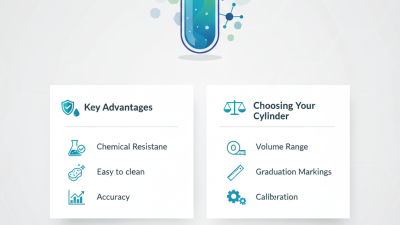
Choosing among the 7 best PTFE measuring cylinders requires more than checking volume markings. Chemical compatibility should lead the comparison. PTFE resists many aggressive laboratory chemicals, but its performance can change with temperature, pressure, and exposure time. Review the manufacturer’s compatibility data carefully. A cylinder with clear, permanent graduations improves repeatability during liquid transfers. However, PTFE is not perfectly transparent. Slightly translucent walls can slow meniscus readings. That matters when measuring small volumes. Smooth internal surfaces support easier cleaning and reduce residue retention. Check the pouring edge, base stability, and wall thickness by hand when possible. Small design details become important during daily use.
Accuracy depends on more than a printed scale. Compare stated tolerances, calibration temperature, and whether readings are marked for containment or delivery. A wide base reduces tipping, especially with taller cylinders. Dimensional stability also deserves attention after repeated heating and cooling. I have found that lightweight models can feel convenient, yet they may move during careful dispensing. That is an avoidable weakness. Look for batch identification, inspection records, and clear technical documentation. These details support traceability across international purchasing teams. Some suppliers provide excellent data but weak packaging. Others offer strong packaging with incomplete test information. Neither option is fully satisfactory. Examine closure fit, surface finish, cleaning access, and shipping protection before approving a cylinder for routine laboratory work.
| Rank | PTFE Cylinder Configuration | Nominal Capacity | Graduation Interval | Indicative Dimensional Range | Recommended Measurement Use | Chemical Resistance | Temperature Capability | Readability and Accuracy Considerations | Key Buying Criteria |
|---|---|---|---|---|---|---|---|---|---|
| 1 | Compact low-volume graduated cylinder | 10 mL | 0.2 mL | Approx. 95–120 mm high; 16–22 mm outside diameter | Small-volume dispensing, corrosive reagent sampling and analytical preparation | Excellent resistance to most acids, bases, solvents and oxidizing chemicals; compatibility should be checked for molten alkali metals and fluorinating agents. | Typical continuous-use range: approximately −50 to +180 °C; exact limits depend on design and load. | Small graduations improve resolution, but meniscus reading and static effects can create significant relative error at low volumes. | Clear, permanent scale; stable flat base; low dead volume; smooth internal surface; calibration documentation if quantitative accuracy is required. |
| 2 | General-purpose narrow-body cylinder | 25 mL | 0.5 mL | Approx. 145–175 mm high; 22–28 mm outside diameter | Routine laboratory transfer, sample preparation and chemical compatibility testing | Very high resistance to aqueous acids, caustics and many organic solvents; PTFE has low moisture absorption. | Typical continuous-use range: approximately −50 to +180 °C. | Suitable for approximate volumetric work; PTFE deformation and thermal expansion should be considered when operating far from room temperature. | Uniform wall thickness; readable graduations; chemical-resistant marking method; secure base; documented dimensional tolerances. |
| 3 | Medium-capacity precision-reading cylinder | 50 mL | 1 mL | Approx. 175–215 mm high; 28–35 mm outside diameter | Daily reagent measurement where non-wetting and chemical inertness are important | PTFE is generally non-reactive and non-wetting with many laboratory chemicals, although some chemicals can permeate or attack fluoropolymer surfaces under severe conditions. | Typical continuous-use range: approximately −50 to +180 °C; short-term exposure may be higher depending on the construction. | Good visual resolution for routine work; not equivalent to a volumetric flask or certified volumetric standard unless individually calibrated. | Stable anti-tip base; easy-to-read scale; low surface retention; dimensional consistency between production batches. |
| 4 | Wide-base chemical handling cylinder | 100 mL | 2 mL | Approx. 220–270 mm high; 38–48 mm outside diameter | General chemical transfer, process sampling and use inside fume hoods | Excellent broad-spectrum chemical resistance; verify compatibility with high-temperature fluorine, strong reducing systems and radiation exposure. | Typical continuous-use range: approximately −50 to +180 °C. | Wider body improves stability but may make the meniscus less distinct; avoid using uncalibrated PTFE cylinders for high-precision preparation. | Wide footprint; impact-resistant construction; clear graduations; easy cleaning; low extractables for contamination-sensitive work. |
| 5 | Large-volume reinforced cylinder | 250 mL | 5 mL | Approx. 290–350 mm high; 55–70 mm outside diameter | Bulk reagent measurement, pilot-scale laboratory work and corrosive liquid handling | Strong resistance to most laboratory acids, alkalis and solvents; PTFE remains non-corrosive in applications where glass or metal may be unsuitable. | Typical continuous-use range: approximately −50 to +180 °C; thermal cycling should be controlled to reduce distortion. | Large dimensions improve capacity but increase handling and reading error; a support ring or reinforced base is beneficial. | Mechanical rigidity; reinforced base; lifting safety; scale adhesion; packaging protection; confirmation of actual usable capacity. |
| 6 | High-capacity graduated process cylinder | 500 mL | 10 mL | Approx. 350–430 mm high; 70–90 mm outside diameter | Pilot-plant sampling, waste-liquid measurement and high-volume corrosive transfers | Excellent resistance to most aggressive laboratory media, with application-specific review required for extreme oxidizers and molten reactive materials. | Typical continuous-use range: approximately −50 to +180 °C. | Best suited to approximate volume measurement; large scale spacing and flexible polymer behavior limit precision compared with calibrated glassware. | Anti-tip geometry; reinforced wall; carrying points; readable scale from a working distance; leak-free construction and secure transport packaging. |
| 7 | Extra-large heavy-duty PTFE cylinder | 1,000 mL | 20 mL | Approx. 430–520 mm high; 95–120 mm outside diameter | Bulk sampling, process development and handling of highly corrosive liquids | Very high chemical inertness for most acids, bases and organic solvents; conduct a compatibility review for unusual reagents, pressure, vacuum and elevated temperature. | Typical continuous-use range: approximately −50 to +180 °C; large parts require careful thermal and mechanical handling. | Designed for capacity and chemical safety rather than analytical precision; use a calibrated transfer system when tight volume tolerances are necessary. | Stable heavy-duty base; structural support; safe pouring design; transparent or high-contrast graduations; inspection for warpage and dimensional stability. |
Note: Dimensions, graduation intervals and temperature ranges are representative purchasing criteria for PTFE laboratory cylinders. Actual specifications vary by wall thickness, manufacturing method, reinforcement, calibration standard and intended chemical service. PTFE cylinders should not be treated as certified volumetric glassware unless an individual calibration certificate is supplied.
Seven Recommended PTFE Measuring Cylinders for Global Buyers
Global laboratories increasingly choose fluoropolymer equipment for harsh chemical handling. MarketsandMarkets’ 2024 Fluoropolymers Market report estimates growth from about USD 8.3 billion in 2024 to USD 11.4 billion by 2029. PTFE measuring cylinders benefit from strong chemical resistance, low surface adhesion, and stable performance across demanding workflows. The seven practical capacities are 10, 25, 50, 100, 250, 500, and 1,000 mL. Smaller sizes support accurate reagent preparation, while larger cylinders suit process sampling and liquid transfer.
For most international buyers, the 10 and 25 mL models fit micro-scale work. The 50 and 100 mL versions offer better daily versatility. Choose 250 mL for routine analytical preparation, then 500 and 1,000 mL for bulk handling. Check graduation spacing, stated tolerance, wall thickness, and base stability. ISO 4788 provides useful dimensional guidance for graduated cylinders, although it primarily addresses glassware. That distinction matters. PTFE is usually opaque, so visual reading can be less convenient.
Ask for material certificates, dimensional inspection records, and cleaning instructions. Confirm whether the cylinder uses molded graduations or engraved marks. Molded marks may fade less, but accuracy still depends on manufacturing control. A 2023 report from Grand View Research identifies chemical processing and laboratory applications as important fluoropolymer demand areas. That supports long-term use, not automatic quality. One uncomfortable point remains: PTFE cylinders are chemically durable, but they are not always the most precise choice. Buyers should verify calibration at the intended temperature and volume range.
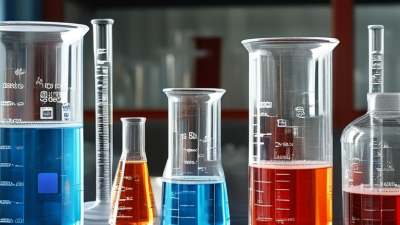
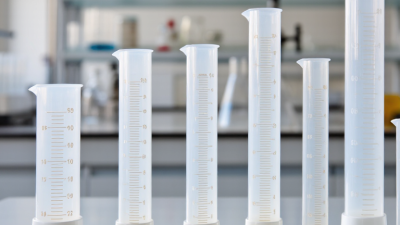
Comparison of commonly available nominal capacities for PTFE measuring cylinders, from small laboratory sampling to high-volume chemical handling.
The capacity range shown—10 mL to 1,000 mL—covers commonly used laboratory and industrial measuring-cylinder sizes. Actual graduation accuracy, tolerance, and operating temperature should be confirmed against the supplier’s technical specification.
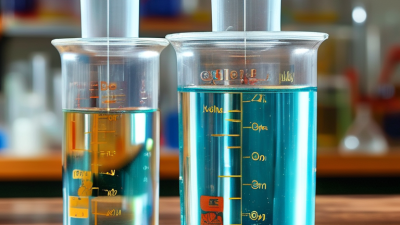
Choosing among the 7 best PTFE measuring cylinders starts with the working volume. Select a capacity slightly above your normal batch size, not the largest available option. A 100 mL cylinder is easier to read than a 1,000 mL model when measuring small additions. Leave headspace to reduce splashing and prevent liquid from touching the rim.
Accuracy requires careful expectations. A graduated PTFE cylinder supports routine transfer and approximate measurement, but it is not a replacement for a calibrated volumetric flask. Check the graduation interval, tolerance, calibration temperature, and certificate traceability. Most references use 20°C. Temperature changes can affect PTFE dimensions slightly. I would also inspect the scale under the actual laboratory lighting. A clear-looking mark can become surprisingly difficult to read.
Chemical resistance is where PTFE earns its place. It handles many acids, bases, solvents, and corrosive mixtures better than common plastics. Still, resistance depends on concentration, temperature, exposure time, and mechanical stress. Review a compatibility chart and request test data for unusual chemicals. Do not assume “chemically resistant” means universally inert. Warped walls, loose graduations, or a stiff pouring edge are practical warning signs. For international purchasing, confirm material grade, inspection records, packaging protection, and replacement availability before comparing price.
7 Best PTFE Measuring Cylinders for Global Buyers
For global buyers, certification is more than a logo on a product page. Check whether the cylinder follows ISO 4788 dimensional requirements for graduated measuring cylinders. Ask for batch records, material identification, and calibration evidence. ISO’s 2023 Survey reported over 1.26 million ISO 9001 certificates worldwide, but quality management certification does not automatically prove measurement accuracy. That distinction matters.
Look closely at customization. A laboratory may need raised graduations, color-coded markings, threaded closures, or a narrow base for crowded benches. Request drawings before production. Confirm tolerance, wall thickness, temperature limits, and chemical compatibility. PTFE resists many aggressive chemicals, yet poor marking adhesion or thermal distortion can still create reading errors. Small details matter. I have seen purchasing teams focus on resin grade while overlooking graduation visibility.
Shipping requires equal discipline. UNCTAD’s Review of Maritime Transport states that ships carry over 80% of global merchandise trade by volume. Buyers should compare ocean, air, and consolidated freight options using landed cost, not freight price alone. Specify protective packaging, moisture control, carton dimensions, and replacement terms. Customs documents should match the product description and quantity exactly. One weak point remains: delivery estimates can change during port congestion, so a realistic buffer is safer than an optimistic promise.