What Are the Top Types of PTFE Measuring Cylinders?
Choosing a measuring cylinder for demanding laboratory work involves more than comparing capacity. A Ptfe Measuring Cylinder can offer strong resistance to many corrosive chemicals, making it useful when glass or ordinary plastics may be unsuitable. Yet PTFE has a practical drawback: it is usually opaque. Reading a meniscus accurately can therefore be harder than with a clear glass cylinder. That small detail matters.
This guide explores common PTFE cylinder configurations, including graduated general-purpose models, tall narrow cylinders, and wider, more stable designs. Their shapes affect storage, pouring, and how easily a sample can be handled on a crowded bench. A narrow model may fit inside a fume-hood setup, while a broad base can feel steadier beside a wash bottle. Capacity, graduation spacing, spout design, and surface finish also deserve attention. Not every product uses the same scale or manufacturing tolerances.
Material resistance alone does not guarantee reliable measurement. Check the manufacturer’s stated accuracy, temperature limits, and cleaning guidance before selecting a cylinder for repeatable work. For critical volume measurements, a transparent, calibrated alternative may be easier to verify. This is easy to overlook. The best type depends on the liquid, workflow, and required precision, not just the PTFE label. A quick bench trial can reveal problems that a catalog description misses, though it cannot replace checking specifications. Each option has trade-offs, and the right choice is the one whose limitations are understood as clearly as its strengths.
What Is a PTFE Measuring Cylinder and How Is It Used?
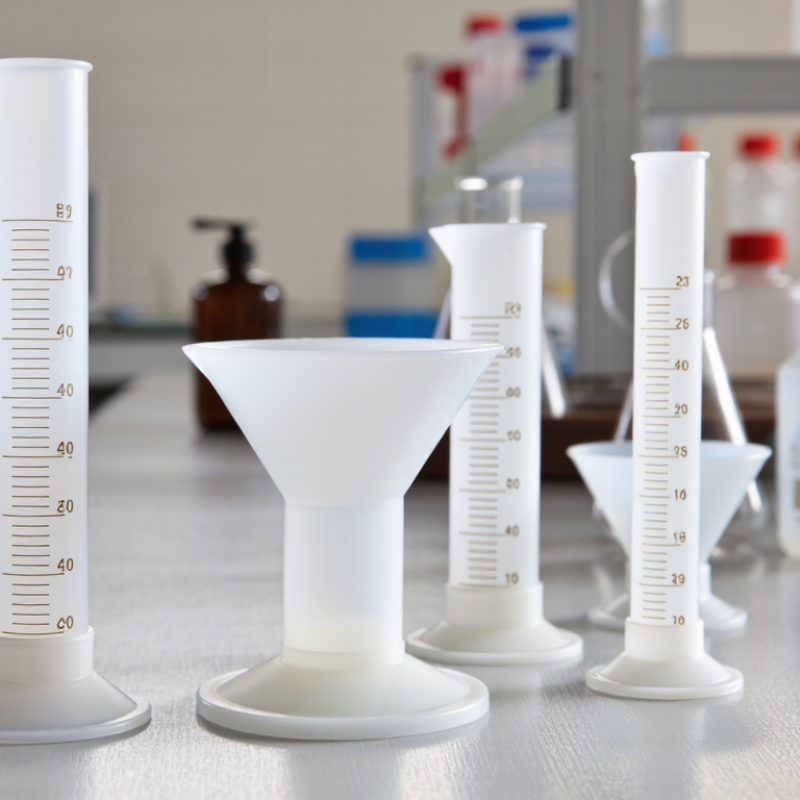
A PTFE measuring cylinder is a graduated vessel made from polytetrafluoroethylene, a material valued for its resistance to many corrosive chemicals. It is used to estimate or measure liquid volume during laboratory preparation, transfer, and testing. The cylinder’s wide base helps it stand upright, while its graduations provide volume references. Check the scale and stated tolerance before relying on a reading. Not every cylinder offers the same accuracy.
Use it on a level bench, and pour slowly to limit splashing. Read the liquid level at eye height; for liquids with an unclear meniscus on PTFE, follow the instrument’s guidance rather than guessing. PTFE’s low-friction surface can make drops cling or slide differently than expected. Small detail, big difference. Avoid scraping the inside with hard tools, and clean it using a method compatible with the liquid and the cylinder. PTFE can also be less rigid than glass, so support it when full. For precise work, verify the cylinder’s calibration and consider whether another measuring vessel is more suitable. In daily use, that judgment is easy to overlook.
What Are the Main Types of PTFE Measuring Cylinders?
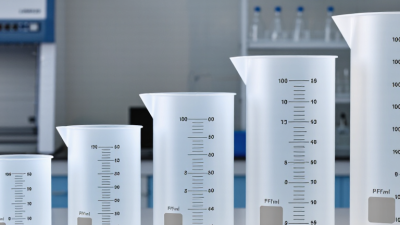
PTFE measuring cylinders are commonly distinguished by shape, capacity, and graduation interval. Tall, narrow cylinders use less bench space and can make small volume changes easier to read. Shorter, wider versions feel steadier when set down, though their broader shape may make fine readings less convenient. That trade-off matters.
Graduated styles vary in how closely the marks are spaced. A cylinder with 1 mL divisions can support finer readings than one marked every 5 mL, but the scale alone does not guarantee accuracy. Check the stated tolerance, read the liquid level at eye height, and use the cylinder on a level surface. PTFE’s low-friction surface can also make liquids drain differently than they do in glass. A small amount may cling or remain behind.
Some models have a pouring lip, while others have a plain rim or a cover. The lip can help direct liquid into a narrow-necked vessel, but it will not prevent splashes when the cylinder is overfilled. Capacity, scale visibility, and ease of cleaning are practical selection points. PTFE markings and graduations can vary, so inspect them before relying on a measurement. That detail is easy to overlook.
How Do PTFE Cylinder Shapes and Capacities Differ?
PTFE measuring cylinders usually follow a tall, narrow form for reading liquid volume, but their shape and capacity vary by intended use. Small cylinders, often around 10–50 mL, suit aliquots and bench-scale checks. Larger options may reach several hundred millilitres, with wider bodies that are easier to fill but take more bench space. Actual ranges depend on the supplier. Fine graduations can help with small readings, though a narrow scale is not automatically more accurate.
For capacity and accuracy, consult the product’s stated tolerance rather than judging by shape alone. ASTM E1272 sets requirements for graduated laboratory glass cylinders; it is a useful reference for how capacity and tolerance are specified, but it is not a PTFE-cylinder specification. PTFE’s chemical resistance can be useful with demanding liquids, yet its opaque or translucent appearance may make the meniscus harder to read than in clear glass. That trade-off is easy to miss.
Tips: Match capacity to the amount you measure. A 100 mL cylinder is often easier to read for a 60 mL sample than a much larger vessel. Check graduation intervals, stated tolerance, and whether the base sits flat. Small practical details matter.
How Can You Choose the Right PTFE Measuring Cylinder?
Choosing a PTFE measuring cylinder starts with the volume you actually need.
Match its capacity and graduation interval to your routine measurements; a large cylinder is awkward for small aliquots. Check whether the scale is molded, etched, or individually calibrated, and ask for stated tolerances. Look closely at the meniscus. PTFE’s surface behavior can make the liquid boundary less obvious than in glass. Small detail, big effect.
Chemical compatibility matters, but temperature and measurement accuracy matter too. Confirm the cylinder’s operating range against the liquid and cleaning process, using technical specifications rather than broad claims such as “chemically resistant.” PTFE can expand with heat, so avoid assuming a reading remains accurate after warming. For traceable work, request calibration information and uncertainty. NIST Technical Note 1297 explains that an expanded uncertainty often uses a coverage factor of 2, corresponding to roughly 95% coverage when the assumptions apply.
For frequent dispensing, choose a stable base, clear graduations, and a spout that pours without leaving drops behind. For corrosive samples, prioritize compatibility and cleanability, then verify that the scale still suits your required tolerance. I would not trust a crisp-looking mark alone. Compare the stated tolerance with your process, and test a representative volume if the result is critical. A small bench trial can expose awkward pouring or hard-to-read graduations before the cylinder enters routine use.